
A/B Testing the Bill of Rights: a16z-Backed Firm Disrupts Democracy with Legislative Beta Tests
Venture capital giant Andreessen Horowitz is funding a new political action group, Polisys, that applies agile software development principles to lawmaking, running live A/B tests of federal legislation in select U.S. cities with predictably chaotic results.

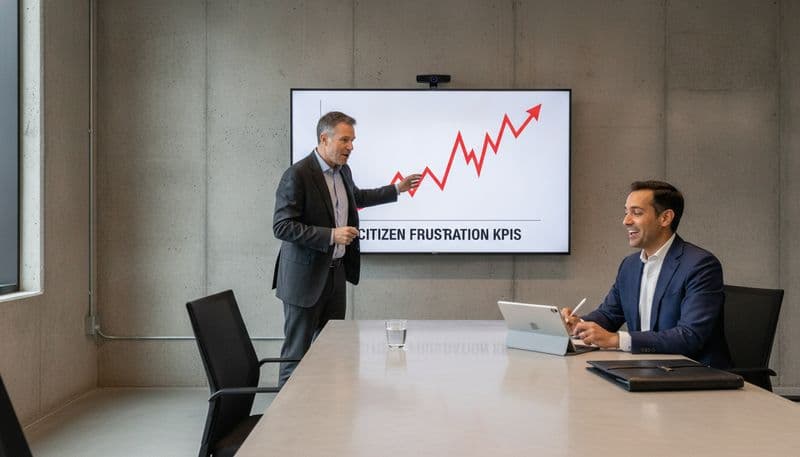
WASHINGTON, D.C. – Forget inefficient legacy systems like 'debate' and 'compromise.' The future of American lawmaking is iterative, data-driven, and funded by a nine-figure seed round. Andreessen Horowitz (a16z), the venture capital firm that taught the world to worship software, has unveiled its latest disruption: a political consultancy named Polisys dedicated to 'shipping governance at scale.' Their flagship product? A/B testing federal legislation.
'Democracy has a fatal UX problem: too much friction, not enough user data,' explained a16z general partner Marc Andreessen in a 10,000-word blog post. 'We don't know if a law works until we deploy it to 330 million users. That's not a launch; it's a prayer. At Polisys, we run legislative sprints. We beta test policies on targeted demographics, analyze the engagement metrics, and iterate.'
The pilot program is an ambitious overhaul of federal data privacy law, the 'American Sovereignty & Privacy Initiative' (ASPI). Polisys, working with compliant municipalities, has rolled out two competing versions of the bill in two separate congressional districts.
In a suburban Ohio district, residents are testing ASPI v1.4, which offers a $50 monthly 'data dividend' in the form of a tax credit for users who opt-in to a centralized federal database monitoring all non-encrypted digital activity. Early metrics show a 92% adoption rate and a 4,000% spike in VPN sales. Meanwhile, a district in Northern California is beta testing ASPI v2.1, which mandates end-to-end encryption for all digital communications but, due to 'compliance overhead,' legally throttles internet speeds to 56k modem levels for any household that doesn't pay a $200 monthly 'Bandwidth Freedom' surcharge.
Representative Ro Khanna (D-CA), whose district borders the v2.1 test zone, has hailed the initiative. 'This is the agile methodology our government needs,' Khanna stated, apparently unfazed by reports of his constituents forming a barter economy based on offline USB stick data transfers. 'Polisys is providing invaluable, real-time feedback. We're moving from a monolithic, waterfall model of governance to a dynamic, responsive microservices architecture.'
Polisys CEO Silas Vector views the early chaos as a resounding success. 'The legacy hardware—that is, the human citizens—is showing some latency in adapting, but the data is clean,' he said, adjusting his Oura Ring. 'The Ohio cohort's cortisol levels are through the roof, a key indicator of high engagement. The California users are generating unprecedented levels of frustration data, which is crucial for optimizing the friction in our next patch. These aren't problems; they're key performance indicators. Anyone complaining is just running on outdated firmware and needs to upgrade their thinking. We're not breaking society; we're debugging it.'
Despite widespread confusion and a burgeoning black market for uncapped internet in California, Polisys is already planning its next sprint: an A/B test of two competing flat-tax codes in Florida and a pilot program in Texas to see if replacing traffic lights with a subscription-based 'priority passage' blockchain token can reduce commute times for premium users.
Join the WiredNeuron Community
Discuss today's analysis and share your perspective on the latest tech and political developments with our readers.
Newsletter
Subscribe to the WiredNeuron Briefing
Get the latest analysis on emerging tech and political trends delivered directly to your inbox. No spam, just high-signal journalism.
Reader Discussion (10)
Rep. Khanna calling this a 'microservices architecture' is embarrassing. He clearly has no idea what that means. Governance isn't a monolith being broken down into independent services; this is just a bifurcated deployment pipeline. Get your buzzwords right, congressman.
This is the inevitable result of government overreach. If the feds just got out of the way and let the market decide on privacy, we wouldn't need these ridiculous 'solutions'. The problem isn't the method, it's the fact that they're making laws in the first place.
Late-stage capitalism is literally A/B testing our rights away for profit. a16z is a parasite and this is just another way for the billionaire class to turn public infrastructure into a subscription service. Tax the rich and regulate big tech into the ground.
I'm actually impressed by the methodology. It's about time the public sector adopted iterative development. The key will be managing the product backlog and ensuring stakeholder feedback from the 'user base' is properly triaged during sprint planning. The chaos is just part of the process!
It's over. We're literally lab rats in a VC-funded experiment and our politicians are cheering it on. Pack it in, folks. The subscription-based fast lane for traffic lights is probably the least dystopian thing in this article.
So a California Democrat is cheering on a tech company from California that wants to throttle the internet and spy on us. Shocker. This is exactly what the founders warned us about. And where's the GOP to stop it? Useless.
A 4,000% spike in VPN sales isn't a 'metric,' it's a massive indicator of user revolt and distrust in the system you just implemented. The fact that the CEO sees this as a positive sign is deeply, deeply disturbing.
Been through three 'agile transformations' at my F500 company. They all ended with more meetings, confused middle managers, and a product that was six months late. Can't wait to see how this scales to a country of 330 million.
'Centralized federal database monitoring all non-encrypted digital activity'. Read that again. This isn't an 'A/B test', it's the full-scale rollout of the surveillance state disguised as a choice. The $50 is just to make the cattle walk into the slaughterhouse willingly.
This entire premise seems to have a serious Equal Protection problem under the Fourteenth Amendment. You can't apply federal law differently to two groups of citizens just to see what happens. This will be in court for a decade.