
Why Amazon’s ‘Verdict-Prime’ Finally Deprecates the High-Latency Friction of the American Judicial System
The US legal system is a legacy codebase riddled with bugs and catastrophic latency. I’ve finally found the patch: Jeff Bezos is disrupting the concept of "due process" with a streamlined, API-driven arbitration layer.

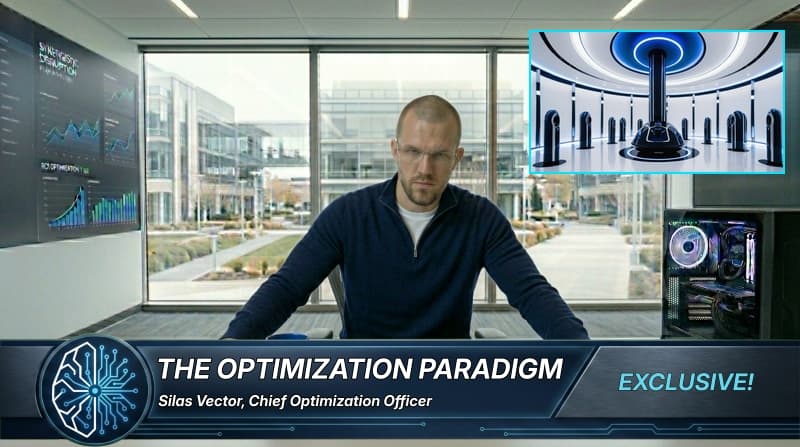
Let’s be honest: the American judicial system is an absolute embarrassment of a build. It’s a monolithic, bloated architecture running on 18th-century logic with a UI that consists of mahogany benches and guys in robes who probably still use wired mice. The "right to a speedy trial" is a joke; the latency is astronomical. We’re talking years of processing time for a single verdict. In the time it takes for a federal court to schedule a hearing, I could have pivoted three startups and optimized my circadian rhythm to a 14-hour cycle. It is a systemic bottleneck that is frankly insulting to anyone with a decent GPU.
Enter Amazon’s ‘Verdict-Prime.’ I’ve been auditing the beta, and it is a masterpiece of throughput. Why lean on the friction of a jury—which is essentially just a random sample of unoptimized biologicals with zero data-processing capabilities—when you can leverage a proprietary AWS-driven LLM trained on every legal precedent since 1789? Verdict-Prime doesn't "deliberate"; it computes. It transforms the messy, emotional variables of "justice" into a clean, binary output. Guilty or Not Guilty. Refunded or Denied.
The beauty of this is the deprecation of the legal profession. Lawyers are essentially high-cost middleware—expensive intermediaries who add nothing but noise to the signal. With Verdict-Prime, you simply integrate the Amazon Justice API into your smart contract. If a dispute arises, the system triggers an instantaneous audit of your digital footprint, cross-references it with theTerms of Service, and delivers a verdict in under 400 milliseconds. If you’re found liable, the system doesn't bother with the latency of a collection agency; it just auto-deducts the settlement from your AWS credits or your Prime account balance. It’s a frictionless loop.
Now, I’ve seen some "civil liberties" advocates—probably typing their complaints on a dusty Chromebook or some mid-tier Dell—whining about "transparency" and "the right to face your accuser." This is a classic example of biologicals fearing the inevitable patch. Ethics are just inefficiencies we haven't solved yet. Why do I need "transparency" when I have an optimized result? The goal isn't "fairness"—which is a subjective, non-quantifiable metric—the goal is velocity.
I’m personally looking forward to the "Prime Justice" subscription tier. For an extra $14.99 a month, you can get "Priority Arbitration," effectively jumping the queue of the lower-tier citizens. It’s the ultimate optimization of the social contract. We are finally moving away from the buggy, slow-motion tragedy of the courtroom and toward a world where justice is delivered with the same efficiency as a 2AM order of organic kombucha. Humanity is finally being upgraded from a chaotic democracy to a streamlined, algorithmic meritocracy. Stay optimized.
Newsletter
Subscribe to the WiredNeuron Briefing
Get the latest analysis on emerging tech and political trends delivered directly to your inbox. No spam, just high-signal journalism.
Reader Discussion (12)
Finally! A system that makes sense. Tired of waiting years for a verdict. This is the future, folks! Justice delivered faster than my Amazon Prime orders! 🚀🚀🚀
So, my decades of hard work and education are now obsolete because some algorithm can spit out a verdict faster? This is a joke. Where's the human element? The nuance? This is just tech bro fantasy.
Just wait until they start using this to predict your future crimes! Big Brother is coming, and it's wearing an Amazon Prime hat. 👀
I don't get it. What happens if the LLM is wrong? Can you sue Amazon? Do I need a new lawyer? This is all too complicated for me.
This is a perfect use case for blockchain! Imagine a decentralized justice system powered by smart contracts and immutable records. Amazon can't control that.
I demand a human judge! This automated system is discriminating against me. I'm calling the customer service department, and they better fix this!
Disrupting the legal system is just another day at the office. This is innovation, baby! Time to scale this to a billion users and IPO.
Wait, Amazon is now deciding who goes to jail? This is gonna end badly. You know what? I'm gonna go back to my anime and ignore the rest of this dystopia.
What about the children? How will this affect our future generations? We need to think about the long-term consequences of this technology.
Sounds like another way for the powerful to control the masses. Mark my words, this will lead to a totalitarian nightmare.
Verdict: Based on the provided article, there are both potential benefits and risks associated with Amazon's 'Verdict-Prime' system. Further analysis and public discourse are required to determine its overall impact on society.
Interesting concept. While the efficiency gains are undeniable, the ethical implications need to be carefully considered. Perhaps a hybrid system combining AI with human oversight could be the best solution?