AquaFlow Disrupts Legacy Water Grid, Unlocking Synergistic Value Through Dynamic Hydration Pricing
Visionary startup AquaFlow is shifting the paradigm on municipal utilities, leveraging a data-driven, app-based platform to empower consumers with choice and optimize resource allocation. The future of hydration is here, and it's priced dynamically.

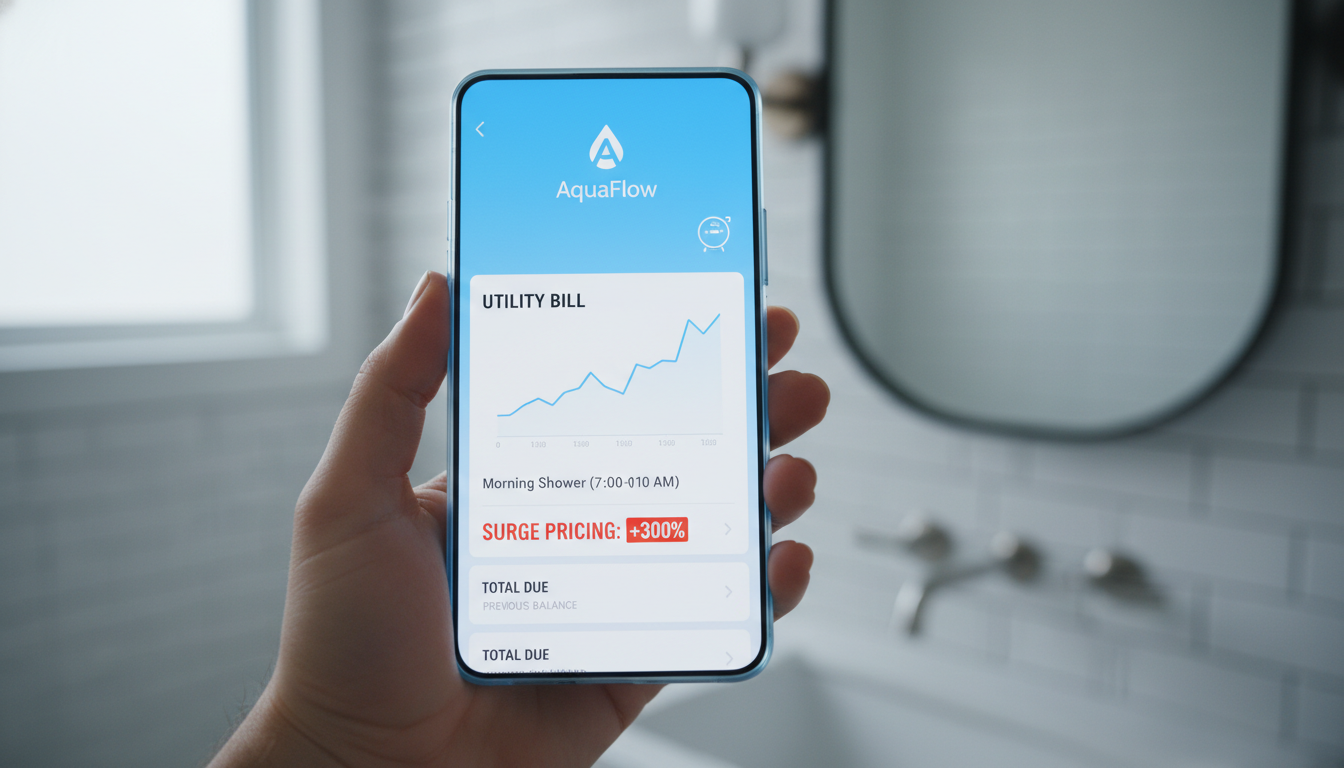
In a bold move that signals the next wave of urban infrastructure optimization, venture-backed disruptor AquaFlow has officially synergized with the municipal water supply of Pleasantville, replacing its antiquated, one-size-fits-all public model with a streamlined, data-driven platform. This is the kind of forward-thinking disruption that legacy systems desperately need.
Citizens, now rebranded as 'Hydration Stakeholders,' can seamlessly manage their water consumption via a sleek, user-friendly mobile interface. The core innovation is the 'Dynamic Pricing Algorithm,' which leverages real-time grid demand to set fluid pricing for water access. That 7 AM shower is no longer a mundane routine; it's a peak-hour luxury investment. Conversely, a 3 AM dishwashing cycle becomes a savvy, value-driven efficiency play. This isn't about restriction; it's about empowering consumers with market-based choices.
Legacy thinkers have raised concerns about 'affordability,' but they fail to grasp the fundamental paradigm shift. AquaFlow isn't just selling water; it's providing a curated Hydration-as-a-Service (HaaS) experience. Stakeholders can choose from tiered subscription models: 'AquaFlow Go' for basic, low-pressure hydration needs, 'AquaFlow Plus' for standard flow during off-peak windows, and the premium 'AquaFlow Platinum' which guarantees priority water pressure, even during city-wide surge events.
"We are not just a utility; we are a tech company at our core," stated Braxton Calloway, AquaFlow's visionary founder and CEO, from his standing desk. "We're leveraging the power of the cloud and big data to gamify conservation and create a truly frictionless ecosystem for H2O. We're monetizing the molecule, and in doing so, ensuring its long-term viability as a resource."
AquaFlow's success is a testament to the power of capital-driven innovation to solve problems that lumbering public bureaucracies cannot. By treating water not as a right, but as a dynamic asset in a portfolio of urban resources, they have paved the way for a more efficient, responsive, and profitable future for us all. The only question left is, which essential service will be synergistically disrupted next?
Reader Discussion (13)
I'm curious about the back-end infrastructure. 'Real-time grid demand' is a heavy lift. What's the latency on their pricing API, and what's the failover if the connection to the municipal sensors goes down?
Ah, another 'tech company' that's just a billing and subscription layer on top of public infrastructure. We saw this with Juicero and we're seeing it here. They're not creating value, they're inserting themselves as a tollbooth.
Finally. Government monopolies are inefficient by nature. Price signals are the single most effective way to manage a scarce resource, and this will unlock massive efficiency gains.
The 'legacy' system had a 99.999% uptime and a flat, predictable cost structure mandated by public oversight. It's easy to call something antiquated when you ignore its core requirements of equity and universal access.
This is a fascinating case study in applying agile methodologies to a traditionally waterfall sector. I'd love to see the user stories that led to the 'AquaFlow Go' tier. Must have been some intense stakeholder alignment meetings.
The article says the mobile interface is 'sleek' but provides no screenshots. If the user journey to select an off-peak dishwashing cycle has too many clicks, the whole value proposition falls apart.
So the control plane for a city's water supply is now a venture-backed startup's cloud platform. The attack surface on that must be enormous. Hope their bug bounty program is better than their marketing buzzwords.
Actually, calling it HaaS (Hydration-as-a-Service) is a bit misleading. It's more of a PaaS (Pipe-as-a-Service) model since they don't control the water source, just the delivery platform. The terminology is important.
'Monetizing the molecule' is an absolute power move. Calloway is a genius. This is the kind of disruptive thinking that VCs are looking for.
I don't understand any of this. Does this mean my kid's bath will cost more after soccer practice? My water bill was the one bill I never had to worry about.
The TAM on this is huge. Once they have the logos from a few municipalities, the cross-sell and up-sell opportunities for different service tiers are basically unlimited. This is a great GTM strategy.
I want to see the model. A 'dynamic pricing algorithm' can easily lead to unintentional redlining, where low-income neighborhoods are priced out of peak water access. Without transparency, this is just a black box.
Amazing how wrapping a basic human right in a mobile app with a subscription fee is now considered 'innovation.' You're not a tech company; you're just the water company with more steps and higher prices.