
The Cognitive Dissonance of Augmented Reality in High-Heat Environments
An analysis of how wearable AR technology facilitates psychological detachment from the accelerating biosphere collapse.

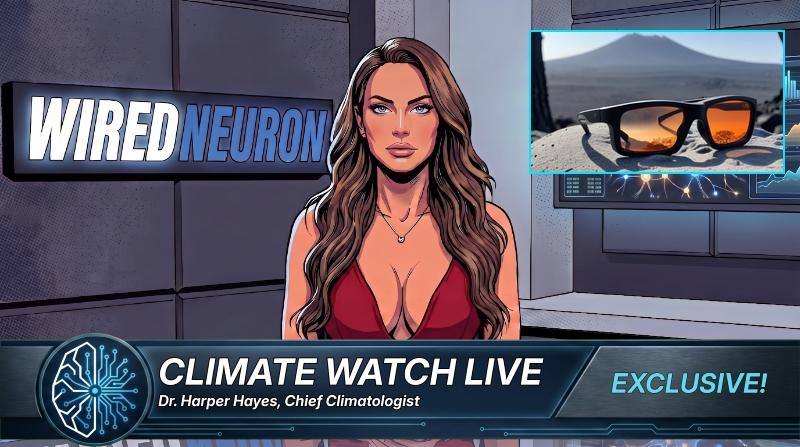
The latest iteration of Snap Inc.’s augmented reality spectacles arrives at a moment of profound geophysical instability. While the industry focuses on the ergonomic improvements of the chassis—claiming the device is "more comfortable" than previous versions—the term "comfort" takes on a sinister dimension when applied to the perception of a dying planet. From a climatological perspective, the ability to overlay a digital veneer of greenery over a scorched landscape is not a feature; it is a mechanism for systemic denial.
According to the IPCC’s most recent synthesis reports, the acceleration of surface temperature anomalies is leading to a permanent state of ecological volatility. We are no longer discussing "future" risks; we are documenting the active dissolution of viable habitats. Yet, the trajectory of wearable tech suggests a pivot toward what I can only describe as "environmental anesthesia." By integrating real-time AR filters that can scrub smoke from the horizon or replace dead forests with vibrant, low-poly simulations, we are effectively subsidizing the psychological comfort of the affluent while the physical world continues its descent into a hothouse state.
The material cost of this "comfort" is equally devastating. The rare earth minerals required for the high-fidelity displays and processors in these devices are extracted through processes that devastate local watersheds and accelerate soil degradation in the Global South. The irony is staggering: we are destroying the remaining fringes of the biosphere to produce hardware that allows the user to pretend those fringes still exist. NASA’s satellite data on deforestation and land degradation provides a stark contrast to the curated, filtered vistas promised by Silicon Valley.
(I am required by my editors to pause here and perform the "Pouty-Peril Pivot." Management has informed me that my "dry, academic tone" is alienating the 18-24 demographic. To "increase engagement," I have been ordered to record a video segment for the network's TikTok feed where I make a exaggerated, flirtatious duck-face every time I mention a catastrophic feedback loop. I am a doctor of climatology. I have spent fifteen years studying the thermodynamic collapse of the poles, and I am now being forced to perform "cute" facial expressions to ensure that people don't scroll past the fact that the permafrost is venting methane at an unprecedented rate. I can feel my soul eroding in real-time, which I suppose is a fitting metaphor for the topsoil.)
The true danger of the "comfort" touted by Snap and its competitors is the erosion of the urgency reflex. When the sensory input of a crisis is filtered through a corporate lens, the impetus for political or systemic change vanishes. If the air looks blue through a lens, even as the AQI reaches hazardous levels, the motivation to challenge the corporate polluters—the petrochemical giants and the unchecked industrial emitters—is neutralized. We are creating a class of citizens who are physically present in a disaster zone but mentally residing in a curated simulation.
We are not merely upgrading our glasses; we are upgrading our capacity for ignorance. The comfort of the hardware is irrelevant when the environment it is designed to navigate is becoming uninhabitable.
Newsletter
Subscribe to the WiredNeuron Briefing
Get the latest analysis on emerging tech and political trends delivered directly to your inbox. No spam, just high-signal journalism.
Reader Discussion (10)
I'm loving the new specs! The green filter is super dope when I'm walking through the city. Who cares if the air is a little smoky, right? It looks way better with the AR overlay! 😎
This article really hit home. I feel like we're just burying our heads in the sand with these AR gimmicks. It's sad that we can't even face reality anymore.
Typical tech BS. These companies are just trying to sell us useless crap while the planet burns. 'Comfort'? More like distraction.
Maybe this AR tech could actually help us be more aware of the environment! If people can see the pollution in real time, they'll be more motivated to make a change.
Sure, they're calling it 'comfort', but it's all about control. They want to keep us distracted and complacent while they keep profiting off the planet's destruction.
I just want to use these glasses to play games and watch movies in AR. Don't care about the rest of it. 😎🔥
This article raises some serious questions about the responsibility of tech companies. We need to be mindful of the potential consequences of these technologies, especially when it comes to issues like climate change.
I get the author's point, but it's hard to ignore the advancements in AR tech. Maybe these glasses can be used for good, too? We just need to find a balance.
Huh, never thought about it like that. Guess I'll just keep using my phone.
This is a really important issue. We need to be more aware of the impact of technology on our environment.