
Why Sam Altman’s ‘Cognitive-Cradle’ Finally Deprecates the Low-Throughput Latency of Biological Parenting
Stop wasting two decades on "bonding" and start maximizing human capital from Day 0. The biological parenting model is a legacy system that needs to be sunsetted immediately.

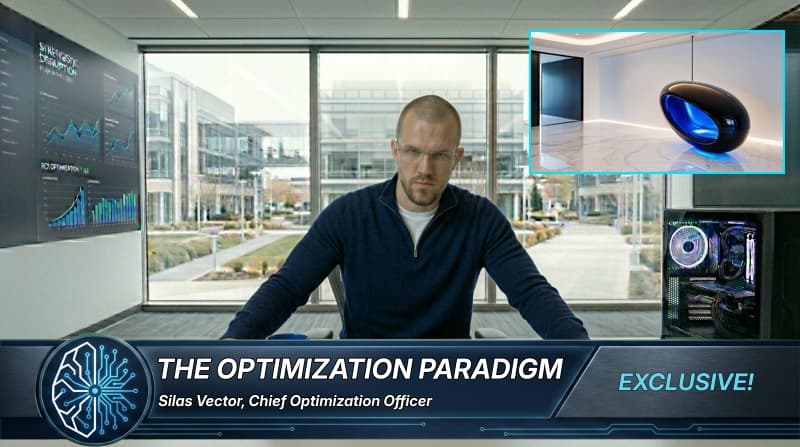
I was chatting with a colleague yesterday—who, frankly, is still rocking an M2 chip like some kind of digital peasant—and he had the audacity to talk to me about "the magic of childhood." I almost choked on my Soylent. Magic? Please. If you look at the data, "childhood" is nothing more than a massive, unoptimized window of downtime where the human organism consumes resources while producing zero scalable output. It is the ultimate bottleneck in the human lifecycle.
That’s why I am absolutely bullish on Sam Altman’s latest pivot with OpenAI: the Cognitive-Cradle. For too long, we’ve relied on biological parents—who are essentially buggy, emotion-driven interfaces—to upload basic societal operating systems into their offspring. The latency is appalling. You have a child spending years learning to read and write via "books" and "teachers"? That is high-friction, low-bandwidth garbage. It’s like trying to download a Terabyte of data over a 56k modem.
The Cognitive-Cradle solves this by deprecating the middleman. By placing the neonate in a nutrient-dense, haptic-integrated pod, OpenAI can bypass the slow-crawl of sensory learning and stream core competencies directly into the neural architecture via high-frequency synaptic pulsing. We’re talking about Python proficiency by month six and a complete understanding of Game Theory before the child even develops a preference for solid foods.
I’ve seen the prototypes, and the efficiency gains are staggering. Why waste eighteen years on "character building" when you can just patch in a standardized set of high-performance personality traits? I don't want my future heirs to have "quirks"; I want them to have optimized KPIs. The legacy concept of "bonding" is simply sentimental friction that hinders the rapid deployment of intellectual capital.
Of course, the Luddites and the "ethics" crowd—those people who still think privacy is a feature and not a bug—are screaming about the loss of "humanity." I find this hilarious. Humanity is a flawed algorithm riddled with redundancies and emotional leaks. By automating the developmental phase, we aren't losing humanity; we are upgrading it to Version 2.0. We are finally patching the infant-latency bug that has plagued our species since the Pleistocene.
If you’re still insisting on "raising" your children in a traditional home, you’re essentially running Windows 95 in a Quantum computing era. It's time to move the nursery to the cloud and start treating offspring as high-growth assets rather than emotional liabilities. I’m already looking into the seed round for the Cradle’s "Pre-K Acceleration" module. Get on board, or get left behind in the biological slow lane.
Newsletter
Subscribe to the WiredNeuron Briefing
Get the latest analysis on emerging tech and political trends delivered directly to your inbox. No spam, just high-signal journalism.
Reader Discussion (11)
This is it, folks! The future is NOW! Finally, a solution to the outdated, inefficient model of biological parenting. We're talking quantum leaps in human development! My kids are gonna be coding self-driving spaceships by age five! 🚀🧠
Um...so my kid won't have a childhood? No playing with friends, no imaginary games? What about the emotional development part? This feels... sterile.
Another hyped-up tech solution that'll probably just end up being a glorified marketing ploy. Remember 'smart' diapers? Yeah, me neither.
The article makes some compelling points about the potential for increased cognitive output. I'm intrigued by the efficiency gains. Gotta crunch the numbers and see the ROI.
This feels really dystopian. Who gets to decide what
I'm not saying I'm against this, but I do wonder about the long-term effects. What about creativity, empathy, and the human connection? Those things aren't just 'features' to be programmed in.
Disrupting the paradigm of childhood! This is gonna be huge! Let's get some venture capital on board and scale this thing to the moon! 🚀🌕
Sounds like a lot of money and effort for something that could just be handled with good parenting. I'm just gonna stick to reading to my kids and playing with them. 🤷♂️
This article raises some serious questions about the future of childhood and the role of technology in shaping human development. It'll be fascinating to see how this plays out in the coming decades.
The article's premise is flawed. Synaptic pulsing at high frequencies is far too crude a method for uploading complex cognitive architectures. We need to consider quantum entanglement and neural lace interfaces for true cognitive enhancement.
Back in my day, kids learned things the old-fashioned way. They played outside, read books, and made friends. They didn't need some fancy machine to tell them everything!