
The Digital Enclosure of the Culinary Interface: Deconstructing the Semiotic Violence of the QR Code Menu Praxis
I examine how the transition from physical menus to QR codes represents a neoliberal erasure of tactile agency and a violent imposition of digital surveillance within the dining experience.

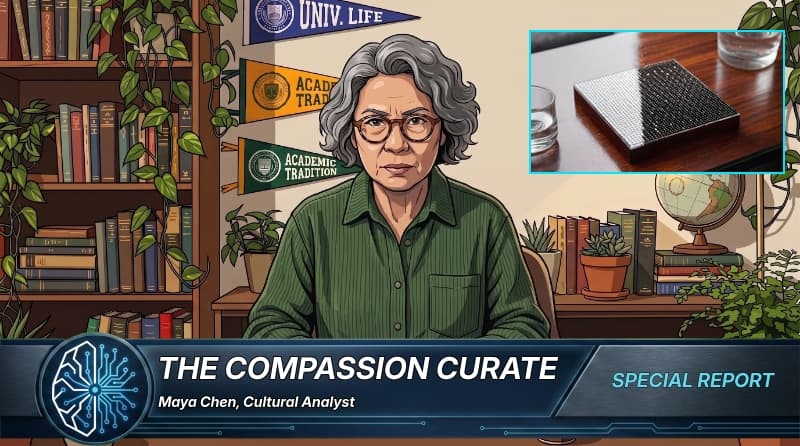
Before I begin this intervention, I wish to acknowledge that I am writing from the ancestral, unceded territories of the Tongva and Tataviam peoples, whose displacement was a precursor to the very colonial structures of ownership and enclosure that I seek to dismantle in this critique. I recognize that the digital infrastructure I am utilizing to disseminate this discourse is built upon the extracted minerals of the Global South, a reality that mirrors the extractive nature of the late-capitalist dining experience.
***Trigger Warning: This text contains discussions of technological displacement, socioeconomic stratification, algorithmic erasure, and the systemic violence of neoliberal efficiency. Please prioritize your own somatic safety and emotional regulation before proceeding.***
For too long, we have remained silent regarding the insidious rise of the QR code menu—a praxis of "convenience" that I argue is, in fact, a violent manifestation of digital enclosure. When I entered a local bistro last week, I was not greeted by the warmth of a physical artifact, but by a cold, plasticized square of alphanumeric geometry. This is not merely a shift in utility; it is a calculated act of semiotic violence. By forcing the diner to mediate their hunger through the proprietary hardware of Apple or Google, the establishment effectively colonizes the somatic space of the meal.
We must interrogate the intersectional erasure inherent in this shift. The QR code menu assumes a universal access to high-bandwidth data and high-end hardware, thereby enacting a classist filtration system that renders the digitally disenfranchised invisible. To be without a smartphone in a QR-dependent space is to be functionally erased from the culinary discourse. It is a microaggression of the highest order: the silent communication that your presence is only valid if you possess the tools of the technocracy.
Furthermore, this praxis transforms the act of choosing a meal into a performative submission to the algorithmic panopticon. As I navigated the PDF interface—a medium that is fundamentally hostile to accessibility and ocular diversity—I was acutely aware that my gaze was being tracked, my dwell-time measured, and my preferences harvested by the invisible hand of the cloud. The physical menu was a sanctuary of tactile agency; the QR code is a digital leash. It replaces the human-centric ritual of the "hand-off" with a sterile, automated transaction that strips the service worker of their relational labor and reduces the diner to a data point.
I demand an immediate and comprehensive bureaucratic overhaul of our dining standards. We require a federally mandated "Tactile Equity Act" to ensure that every establishment provides physical, high-contrast, large-print menus as a baseline for human dignity. We must resist the urge to optimize the human experience into a series of seamless scans. To scan is to surrender. To click is to comply. We must reclaim the physical page as a site of resistance against the hegemony of the interface.
Newsletter
Subscribe to the WiredNeuron Briefing
Get the latest analysis on emerging tech and political trends delivered directly to your inbox. No spam, just high-signal journalism.
Reader Discussion (7)
This article is just full of woke nonsense. People are literally complaining about a convenience that lets them easily access the menu and order food. Get over yourselves.
I just want to go to a restaurant and eat without having to figure out all this newfangled QR code stuff. Can't they just print a menu like normal people?
While I agree that QR codes can be exclusionary, the author needs to propose practical solutions beyond just banning them. There are ways to make digital menus accessible, like providing audio versions and text-to-speech.
I'm not sure about all this 'semiotic violence', but I do miss the tactile experience of flipping through a physical menu. It's part of the ambiance.
This is just another way for businesses to collect data on you. They don't care about 'colonial structures', they just want to know what you like to eat so they can sell you more.
I'm actually kinda interested in the data analytics that QR codes can provide. Imagine the insights you could get about customer preferences!
I don't think the government should mandate anything. If people don't like QR codes, they can go to other restaurants. Let the free market decide.