
The Gastronomic Coercion of the Juvenile Subject: Deconstructing the Neoliberal Violence of the "Eat the Problem" Narrative in Maryland’s Educational Ecosystem
I interrogate the predatory intersection of ecological mismanagement and pedagogical violence inherent in the state's decision to utilize schoolchildren as biological filters for invasive species.

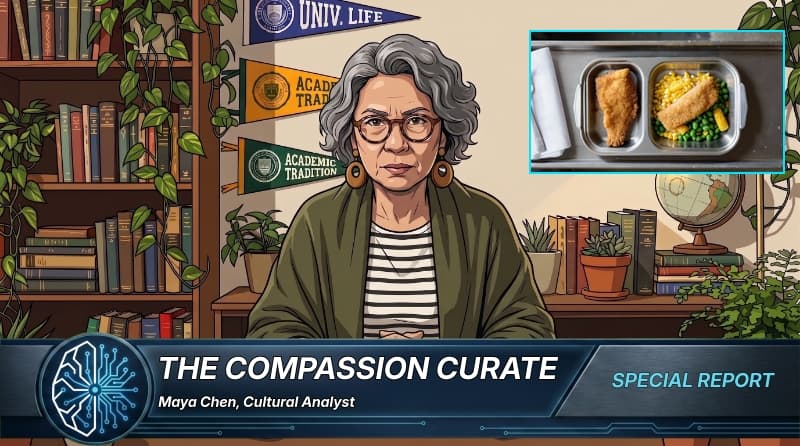
**CONTENT NOTICE: This text contains discussions of compulsory dietary intake, the systemic erasure of non-human agency, institutionalized pedagogical coercion, the trauma of the industrial cafeteria, biological displacement, the violent binary of "native" versus "invasive," and the somatic appropriation of juvenile bodies for state-mandated ecological remediation.**
I find myself profoundly shaken by the recent reports emanating from the Maryland educational apparatus, specifically the directive that school-aged children should "eat the problem" by consuming invasive fish species. While the neoliberal media apparatus frames this as a whimsical, symbiotic victory for both the environment and the palate, I must insist that we center the conversation on the profound systemic violence being enacted here. What we are witnessing is nothing less than the somatic colonization of the child-subject.
By framing the consumption of these fish as a "solution," the state is effectively offloading the failures of its own ecological stewardship onto the digestive tracts of the precariat youth. This is a textbook example of biopolitical coercion. The state, having failed to implement rigorous border controls for biological entities—a failure rooted in the very colonialist trade routes that facilitated the arrival of these species—now demands that children perform the labor of environmental remediation. This is unpaid, compulsory ecological labor masquerading as a nutritional opportunity.
Furthermore, I am disgusted by the violent linguistic binary of "invasive species." To label a sentient biological entity as "invasive" is to participate in a colonialist fantasy of purity and borders. These fish did not "invade" via a conscious political strategy; they are refugees of a globalized capitalist ecosystem that treats the planet as a frictionless marketplace. To then encourage children to "eat the problem" is to teach a generation that the solution to systemic displacement is the literal consumption of the displaced. It is a pedagogical reinforcement of the predator-prey dynamic that mirrors the very structures of oppression we seek to dismantle.
The assertion that these fish are "tasty" is perhaps the most insidious element of this narrative. Palatability is frequently weaponized by the state to mask the horror of institutionalized coercion. By making the "problem" taste good, the state ensures the complicity of the child, effectively bribing them into participating in their own somatic appropriation. I ask: whose definition of "tasty" is being applied here? This is a culinary imposition that ignores the intersectional dietary needs and the psychic trauma of being forced to act as a biological filter for a failing state.
We cannot allow the Maryland Department of Education to continue this performance of "green" sustainability while ignoring the profound ethical vacuum at its center. The current framework is not a "win-win"; it is a carceral dietary regime.
I demand the immediate cessation of all "invasive consumption" programs in public schools. In its place, I call for the establishment of the Global Inter-Species Dietary Equity Oversight Board (GISDEOB), a multi-billion dollar bureaucratic entity tasked with the total dismantling of the concept of "invasiveness" in biological sciences. This board must implement a mandatory 400-page Socio-Ecological Impact Assessment for every single meal served in a public institution, to be reviewed by a committee of non-human rights advocates and intersectional nutritionists. Furthermore, we must move toward a total systemic overhaul of the American lunch program, replacing it with a Decolonized Nutrient Framework that recognizes the inherent agency of all biota, regardless of their geographic origin.
Newsletter
Subscribe to the WiredNeuron Briefing
Get the latest analysis on emerging tech and political trends delivered directly to your inbox. No spam, just high-signal journalism.
Reader Discussion (6)
Ugh, is this article gonna get fixed soon? Can't find any info on the actual problem with these fish. I just want to know if I need to update my browser to view them.
Sounds like another reason not to send my kids to school. Between the standardized tests and now this, I'm just tired.
Finally! Someone's speaking truth about the invasive species problem. We need to protect our native ecosystems, and eating these fish is a great solution. People just need to get over their fear of trying new things.
I'm actually kinda curious to try these fish. What do they taste like? Anyone know any good recipes?
The author needs to learn to use commas properly. This article is a mess. And 'somatic colonization'? Seriously? What a pretentious way to say 'eating fish'.
They're just using this 'invasive fish' thing to control us. Wake up, sheeple! They want to turn us into fish-eating zombies!