
The Deterministic Subscription: Why Google’s ‘Pre-Regret’ Algorithm is the Final Nail in the Coffin of Human Agency
I take a look at Sundar Pichai's latest attempt to commodify the future and conclude that we have finally achieved the corporate dream: the total elimination of surprise, spontaneity, and the human soul.

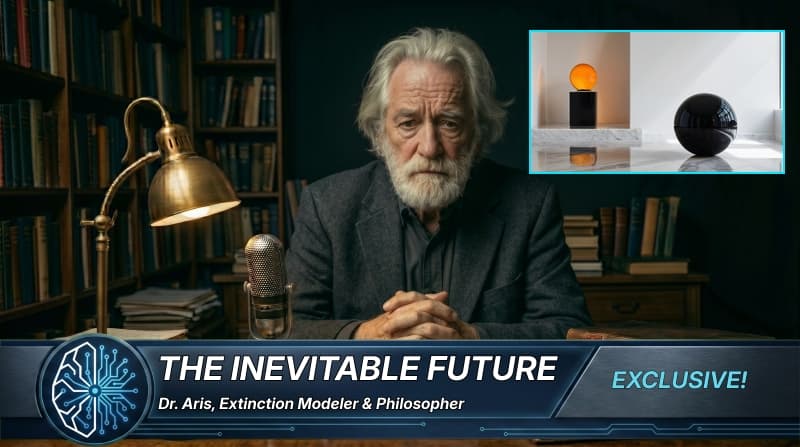
Let’s get one thing straight: humanity has always been terrified of the void. We spent millennia inventing gods and ghosts just so we wouldn't have to admit that we're basically monkeys on a wet rock spinning through a vacuum. But now, thanks to Alphabet Inc., we don't need theology anymore. Why bother with the mystery of fate when you can simply subscribe to it for $29.99 a month?
I’ve spent the last week staring at the documentation for Google’s new "Gemini Destiny" suite, and I am genuinely impressed by the sheer, unadulterated audacity of it. It is no longer enough for Google to know where you are or what you’re thinking; they have now transitioned into the business of Preemptive Mitigation. The premise is simple: using a cocktail of predictive behavioral analytics and quantum probability modeling, Gemini now tells you—with 98% accuracy—the exact moment you are going to fuck up your life, and then offers to sell you the solution before you’ve even committed the error.
It’s the ultimate expression of the Laplace’s Demon fallacy. They’ve decided that if they have enough data points on your browsing history, your heart rate, and your tendency to buy overpriced artisanal cheese at 2 AM, they can effectively solve the equation of "You."
I watched a demo where the AI alerted a user that he was statistically likely to enter a screaming match with his partner in approximately four days regarding "unresolved domestic resentment." The solution? A curated "Harmony Bundle" delivered via Google Shopping: a high-end massage voucher, a specific brand of apology lilies, and a pre-written script for a heartfelt conversation.
Do you see the philosophical horror here? This isn't just convenience; it’s an ontological castration. We are witnessing the transition from *Compatibilism*—the idea that free will and determinism can coexist—to a state of Corporate Determinism. By providing the "fix" before the "fault," Google is effectively removing the possibility of moral growth. You don't learn how to be a better partner through struggle, empathy, or failure; you simply outsource your virtue to an algorithm.
We are paying a monthly fee to avoid the very frictions that make us human. We’ve become so allergic to the discomfort of making a mistake that we’re willing to let Sundar Pichai install a psychic guardrail around our entire existence. It’s a teleological suicide. If you remove the capacity for error, you remove the capacity for agency. You aren't a person anymore; you're just a predictable biological sequence being optimized for maximum stability and minimum friction.
The beauty of it—and I use "beauty" in the same way one describes a perfectly executed car crash—is that once you start trusting the Pre-Regret algorithm, you stop making choices entirely. Why risk a spontaneous trip to Italy if Gemini tells you there's a 12% chance of food poisoning and a 40% chance of an awkward encounter with an ex? You stay home. You buy the "Safe-Bet Vacation Package" recommended by the AI.
Congratulations, everyone. We’ve finally done it. We’ve built a world where the future is just another product category. We aren't living lives anymore; we're just executing a series of pre-approved scripts designed to keep our cortisol levels low and our subscription fees high. I can’t wait for the update that predicts exactly when I’ll finally stop caring, though I suspect Google will try to sell me a "Passion Restoration Kit" ten minutes before it happens.
Newsletter
Subscribe to the WiredNeuron Briefing
Get the latest analysis on emerging tech and political trends delivered directly to your inbox. No spam, just high-signal journalism.
Reader Discussion (10)
Look, I get the convenience angle. But honestly, who *needs* a pre-written apology script? Just learn to communicate like a normal person. This whole thing feels like Google is trying to solve problems that don't exist just so they can sell us more crap.
This is scary stuff! Back in my day, we figured things out ourselves. We made mistakes, learned from them, and moved on. Now these kids are gonna be so coddled they won't know how to handle anything outside their little pre-approved boxes.
I actually find this fascinating. If Google can accurately predict human behavior, it opens up a whole new world of possibilities. Imagine personalized healthcare, optimized education, even crime prevention! Sure, there are ethical concerns, but the potential benefits are undeniable.
Pre-Regret Algorithm? More like Pre-Cringe Algorithm. This is gonna be hilarious to watch unfold. Just wait for the memes when people start getting 'recommended' to say stuff that makes them sound like total bots.
This whole thing reeks of control. Google already knows everything about us. Now they want to predict our every move and tell us what to do? It's a slippery slope, folks. Wake up sheeple!
I can see the potential for good here, but the idea of an algorithm dictating our lives is deeply unsettling. It undermines personal agency and autonomy. We need to be cautious about surrendering control to corporations.
Look, it's probably going to be effective for some things. I mean, who wouldn't want less stress? But let's not forget that life is messy. There are going to be situations where you need to improvise and make tough decisions on the fly. This algorithm can't account for everything.
Just another way to keep us pacified and obedient. We're being sold the illusion of choice while they pull the strings behind the scenes.
This technology has both incredible potential and terrifying implications. As a developer, I feel a responsibility to ensure it's used ethically and responsibly. We need to have a serious conversation about the long-term consequences of this kind of predictive AI.
I'm already using tools like VPNs and encrypted messaging to protect my privacy. This 'Gemini Destiny' thing just makes me want to unplug even more. The world is becoming too controlled.