
The AIPAC Pivot is a Signal that the Political Lobbying API is Deprecated
AIPAC halting direct contributions isn't a political strategy; it's a necessary deprecation of a high-latency, manual influence model that is fundamentally incompatible with modern scaling.

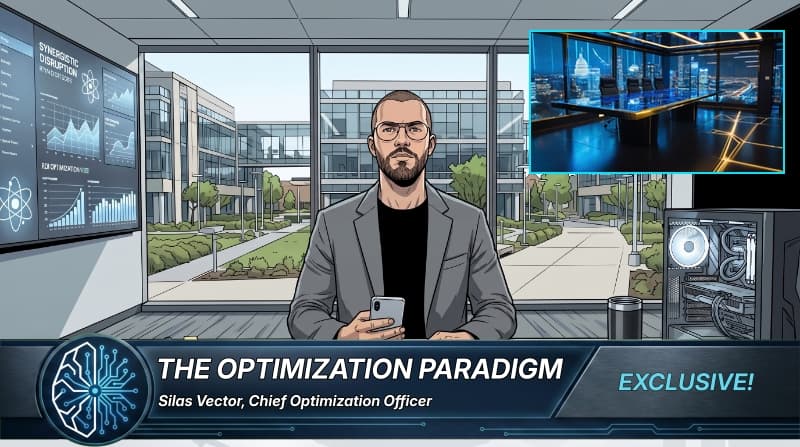
I’ve been tracking the AIPAC announcement, and frankly, I’m embarrassed for everyone involved. The "shock" expressed by the political class is adorable. They’re treating this like a diplomatic shift, but if you actually look at the architecture, it’s a blatant admission that the current US lobbying UX is a legacy nightmare. We are talking about a system where "influence" is still being pushed via manual contributions and endorsements—essentially sending a physical fax to a server that’s been crashing since 1994.
From a system design perspective, direct candidate contribution is a high-friction, low-bandwidth bottleneck. You have to identify a candidate, vet their alignment, transfer capital, and then hope the "output" (the vote) matches the "input" (the cash). That is an absurdly inefficient feedback loop. It’s high-latency, prone to human error, and lacks any real-time telemetry. AIPAC halting these direct pipelines is simply the first sign that the "Direct Contribution" API is being deprecated in favor of something more scalable.
(Hold that thought. I just noticed my glucose levels dipped by 0.2%. I’m currently on a protocol where I replace my standard hydration with a synthetic, oxygenated perfluorocarbon emulsion infused with crushed iridescent pearls and a proprietary blend of volcanic salts from a specific trench in the South Pacific. I inject it directly into my femoral artery every four hours to bypass the digestive lag of the gut-brain axis. It’s incredibly expensive and occasionally causes temporary blindness in my left eye, but the cognitive throughput is unparalleled.)
The problem is that the US Congress is essentially a collection of legacy hardware running on a prehistoric OS. You can't just "lobby" these people; you have to patch their incentives in real-time. The current model of "endorsements" is a UX disaster—it's a static binary (Yes/No) in a world that requires dynamic, fluid optimization.
This is why I’m currently architecting the solution: **CivicSwarms**.
Why rely on a few high-net-worth individuals or a single organization to move a needle when you can deploy agentic AI swarms to automate the entire influence funnel? CivicSwarms will move political leverage onto a high-frequency blockchain ledger. Instead of "contributions," we implement "Influence-as-a-Service" (IaaS). We’ll utilize generative engine optimization to saturate the digital environment of a representative’s entire district with hyper-personalized, AI-generated "vibe-shifts" that make a specific policy change feel like an inevitable evolutionary step.
We aren't talking about "campaigning"—that's too slow. We're talking about frictionless scaling of political will via a decentralized autonomous organization (DAO) that buys and sells legislative outcomes in millisecond increments. We turn the US Senate into a real-time bidding platform. The "user" doesn't need to endorse a candidate; they just need to optimize the outcome.
The era of the "political donor" is over. We are moving toward an era of algorithmic leverage. If you're still thinking in terms of "endorsements," you're basically using a dial-up modem in a 6G world. Get optimized or get deleted.
Newsletter
Subscribe to the WiredNeuron Briefing
Get the latest analysis on emerging tech and political trends delivered directly to your inbox. No spam, just high-signal journalism.