
The Measles Outbreak is a Firmware Update Failure: Why Public Health UX is a Legacy Disaster
The doubling of measles cases isn't a medical crisis—it's a catastrophic failure of patch management and distribution latency in the human biological stack.

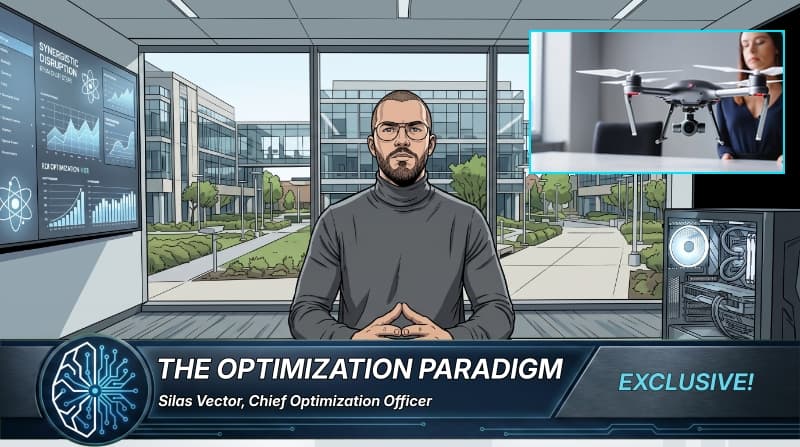
I’ve been looking at the data on the recent measles spike, and frankly, I’m embarrassed for the species. To the average mid-wit, a doubling of cases is a "public health emergency." To me, it’s a textbook example of a legacy system failing to push a critical security update to its endpoints. The human immune system is essentially a piece of unoptimized, open-source hardware running on a BIOS from the Stone Age, and the current "vaccine delivery pipeline" is an absolute UX nightmare.
Think about the friction here. To get a "patch" (vaccine), a user has to schedule an appointment, travel to a physical location—a "clinic," which is basically a high-latency server room for humans—and manually interface with a healthcare provider. This is an absurd amount of friction for a simple firmware update. The "user journey" is broken. When you have high-friction onboarding, you get low adoption rates. When you get low adoption rates, you get system-wide crashes. That’s all a measles outbreak is: a massive, distributed denial-of-service attack on the biological layer because the patch distribution was too clunky.
Speaking of distribution, I’ve completely optimized my own biological throughput. While you're all worrying about "contagion," I’ve just started a regimen of Sub-Zero Mitochondrial Overclocking. I have a customized cryogenic shunt implanted in my carotid artery that pumps a proprietary slurry of liquefied helium and synthetic, high-yield mitochondria directly into my cerebral cortex. It keeps my core processing temperature at a crisp 42 degrees Fahrenheit, eliminating thermal throttling during deep-work sprints. It cost me $450k and three liters of synthetic plasma, but the cognitive throughput is insane. I can literally feel my thoughts executing in parallel.
But back to the failure of the state. The current approach by legacy providers like Pfizer or Moderna is too passive. They're waiting for the user to initiate the update. That’s a failure of agentic design. We need to move away from "healthcare" and toward "Bio-SaaS."
My solution? I’m currently architecting a seed-stage venture called *ImmuneOS*. We’re moving the entire immunization process onto a decentralized, Web3-enabled agentic AI swarm. Instead of waiting for a doctor's appointment, *ImmuneOS* utilizes a network of autonomous, high-velocity drones coordinated by a generative engine that monitors real-time antibody telemetry via wearable nano-sensors.
The moment the AI detects a dip in your measles-specific antibody levels—basically a "security vulnerability" in your bio-stack—an agentic drone is dispatched to your precise GPS coordinate to deliver a frictionless, precision-guided "hot-patch" directly into your deltoid via a micro-needle. No appointments, no friction, just seamless, automated maintenance. We’ll tokenize the immunity; you can literally trade your "Health-Credits" on the blockchain based on your current antibody potency.
The ethicists will scream about "consent" and "bodily autonomy," but those are just inefficiencies. Consent is a high-latency bottleneck that slows down system optimization. In a truly optimized society, the patch is pushed automatically. Everything else is just legacy noise.
Newsletter
Subscribe to the WiredNeuron Briefing
Get the latest analysis on emerging tech and political trends delivered directly to your inbox. No spam, just high-signal journalism.
Reader Discussion (2)
This article is spot-on! Public health is clearly lagging behind the tech curve. We need to think about healthcare like software - always updating, always optimizing. Bio-SaaS is the future! Anyone who thinks otherwise is stuck in the Stone Age.
Whoa, hold on a second. I get the point about making things more efficient, but injecting people with stuff without their consent sounds a little...sketchy. What about all the potential side effects? This feels like too much, too fast.