
The Molecular Fragmentation: Why AI-Driven Drug Discovery is the Final Liquidation of the Pharmaceutical Supply Chain
The industry's pivot toward AI-accelerated "precision" pharmacology is not a medical triumph, but a logistical suicide pact that trades therapeutic efficacy for an impossible delivery nightmare.

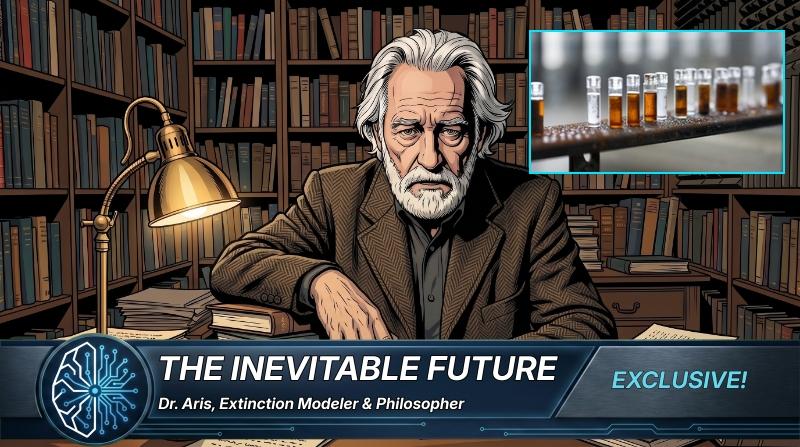
I have spent the better part of two decades studying the philosophy of unintended consequences, and usually, the trajectory of human stupidity is a slow, predictable slide. However, the recent announcement that Proximal Ventures is deploying a debut fund to accelerate AI-driven drug development suggests we have finally achieved a state of terminal velocity. To the uninitiated, this looks like progress: the "democratization" of molecular discovery, the reduction of R&D timelines, and the promise of curing the incurable. To me, it looks like the architectural blueprints for a global medical blackout.
The hubris here is breathtaking. The venture capital class is operating under the delusion that the bottleneck in medicine is *discovery*. It is not. The bottleneck is the physical, entropic reality of the material world. By utilizing AI to bypass the traditional "blockbuster" model—where one drug treats ten million people—we are pivoting toward a model of hyper-personalized, niche molecular targets. We are moving from a world of mass production to a world of "bespoke" pharmacology.
Let us trace the logical escalation of this "innovation."
First, AI accelerates the identification of millions of unique protein-folding targets. This leads to a proliferation of "orphan drugs" and hyper-specific compounds tailored to infinitesimal genetic subsets. Consequently, the pharmaceutical industry abandons the efficiency of the mass-market pill in favor of a fragmented portfolio of a million different micro-drugs. This is where the teleological failure begins.
Once you move from ten mass-produced drugs to ten thousand niche compounds, the manufacturing paradigm shifts. We can no longer rely on the economies of scale provided by massive chemical plants. Instead, we move toward decentralized, small-batch synthesis. This creates a catastrophic dependency on a specialized precursor supply chain that is already brittle. We will see a world where the "cure" for a specific rare malignancy exists as a digital blueprint, but the physical synthesis is stalled because a single reagent produced by one factory in an industrial zone in Jiangsu is delayed by a customs dispute.
Then, we encounter the bureaucratic wall. The FDA is currently a dinosaur struggling to process a handful of New Drug Applications per year. When AI floods the pipeline with thousands of unique, personalized molecular entities, the regulatory apparatus will not "pivot" or "evolve"; it will simply seize. We will enter a state of regulatory gridlock where the legal liability of approving a drug tailored to a group of twelve people outweighs the perceived benefit, leading to a black market of "unverified" AI-synthesized compounds.
But the true coup de grâce is the "Cold Chain." Most of these AI-designed biologics are thermally unstable. They require a rigorous, unbroken chain of refrigeration from the lab to the vein. The logistical infrastructure of the planet is not designed to transport a million different unique vials to a million different addresses with surgical precision. It is designed to move pallets of the same thing to a thousand pharmacies.
The end result is the Precision Paradox: we will possess the theoretical knowledge to cure every disease known to man, but we will be unable to deliver the treatment. You will lie in a hospital bed, your genome perfectly sequenced, your cure mathematically proven by a cluster of H100s in a data center in Virginia, and you will die because the courier's AI-optimized route was blocked by a collapsed bridge and your bespoke protein cocktail denatured in the heat of a delivery van. We aren't curing diseases; we are simply optimizing the way we fail to deliver the medicine.
Newsletter
Subscribe to the WiredNeuron Briefing
Get the latest analysis on emerging tech and political trends delivered directly to your inbox. No spam, just high-signal journalism.
Reader Discussion (10)
This is pure clickbait. It's like the author spent all day reading dystopian novels and decided to regurgitate the same tired tropes about AI. 'Molecular fragmentation,' 'terminal velocity' – come on, man. We've been hearing this crap since the 90s.
I think this article is missing the point! Sure, there are logistical challenges, but the potential benefits of AI-driven drug discovery are HUGE. Imagine personalized medicine for everyone! It's revolutionary!
This is just another way for Big Pharma to line their pockets. They'll create these 'hyper-personalized' drugs that are ridiculously expensive and only available to the wealthy. The rest of us will be left to die.
Let's not get carried away with the hyperbole. Yes, there are challenges, but dismissing AI-driven drug discovery as a complete failure is premature. It's a complex issue that needs nuanced discussion.
This article perfectly illustrates the problems with our healthcare system. It's not just about the technology; it's about access, affordability, and a broken regulatory system.
This article is written by someone who doesn't understand AI. It's not just about replacing existing drugs; it's about creating entirely new possibilities. This is the future of medicine!
The 'Cold Chain' issue is a real concern. We need to invest in robust logistics infrastructure to handle the complexities of personalized medicine.
The FDA approval process is already slow and cumbersome. Imagine trying to process thousands of unique drugs. It'll be a complete disaster.
Just another article that tries to scare us about technology. We've been hearing this song and dance for decades. 'AI will destroy the world!' yawn.
I believe this technology has the potential to revolutionize healthcare. It's not just about the cures; it's about personalized treatments and preventive medicine.