
The Predictive Purgatory: Why Alex Karp’s ‘Civic-Harmony’ is the Final Execution of Free Will
I dissect how Palantir's latest behavioral nudging engine doesn't just predict our dissent—it deletes the neurological capacity to conceive it.

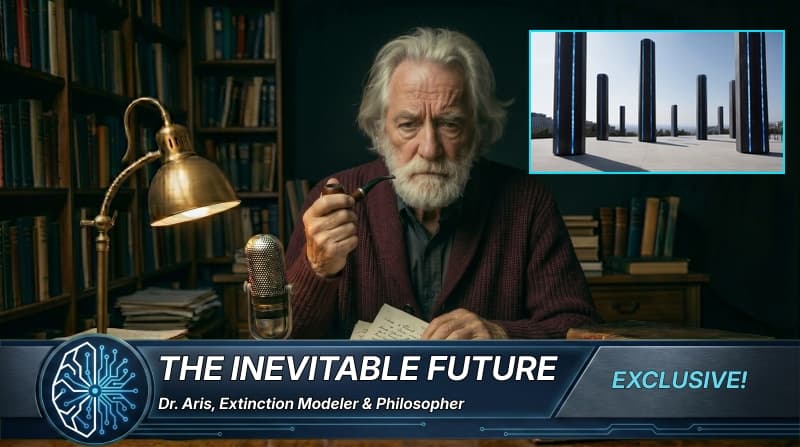
Let’s get one thing straight: we’ve spent the last two decades pretending that "privacy" was the prize we were losing. What a quaint, mid-century delusion. Privacy is for people who still think their inner monologue is a secret. The real tragedy isn't that they’re watching us; it’s that Alex Karp and his wizards at Palantir have finally figured out how to make the watching irrelevant by automating the "will" right out of the human equation.
Enter 'Civic-Harmony.' On the surface, it's marketed as a masterpiece of urban optimization—a predictive layer designed to "smooth out" societal friction. It uses high-fidelity behavioral telemetry to nudge citizens away from conflict and toward "pro-social outcomes." In plain English: it’s a digital leash that tugs on your collar before you even realize you wanted to bark.
Now, let's apply some basic teleological logic here. For a human being to be a moral agent, they must possess the capacity for *contrary choice*. If I choose to be kind because I am terrified of a social credit penalty or because an algorithm has subtly manipulated my dopamine levels through my smart-devices to make me feel "warm" toward a government official, I haven't actually performed a virtuous act. I’ve simply functioned as a well-programmed toaster.
We are witnessing the birth of Ontological Pre-emption. This isn't just surveillance—that's old hat. This is the systemic erasure of the *possibility* of dissent. When Palantir’s engine identifies a "probability spike" for civil unrest in a specific zip code, it doesn't send in the riot police; it adjusts the environmental variables. It throttles the information flow, alters the commute patterns, and modulates the digital atmosphere until the impulse to protest is smothered in its crib by a wave of algorithmically induced apathy.
It’s brilliant, really. Why bother with the messy business of arresting dissidents when you can simply ensure that the "dissident" never exists in the first place? By preemptively neutralizing the cognitive conditions required for rebellion, Karp has achieved the ultimate goal of every tyrant since Nero: a population that is perfectly compliant because they have lost the imaginative capacity to be otherwise.
We are sliding into a state of Predictive Purgatory. We aren't living lives; we are executing scripts written by a black-box heuristic in a server farm in Virginia. The "Harmony" in Civic-Harmony isn't peace—it's the silence of a graveyard where the ghost of Free Will has finally been evicted. I’ll see you all at the mandatory joy-session, provided the algorithm decides you’re in the mood for it.
Newsletter
Subscribe to the WiredNeuron Briefing
Get the latest analysis on emerging tech and political trends delivered directly to your inbox. No spam, just high-signal journalism.
Reader Discussion (10)
This article is a bit hyperbolic, don't you think? Sure, Palantir is powerful, but 'Ontological Pre-emption'? Come on, man. Sounds like something out of a sci-fi novel. Give me a break.
Look, I'm all for efficiency, and if Civic-Harmony can actually reduce crime and social unrest, then I'm in. I just hope they're using anonymized data and being transparent about their algorithms. Otherwise, this whole thing could get really creepy.
This is exactly why we need more regulation on Big Data! These companies are playing God with our lives. They're manipulating our thoughts and behaviors, and they don't even care. Wake up, sheeple!
They're trying to control us! This is just another way for the government and corporations to keep us in line. Don't believe the hype about 'civic harmony.' It's just a fancy name for totalitarianism.
This is the future! Imagine a world without crime, poverty, or social unrest. It's all possible with technology like Civic-Harmony. We just need to trust the experts and embrace progress.
I don't understand any of this. All I know is that my grandkids are glued to their phones all day, and I'm worried about what they're being exposed to.
This article raises some interesting points about the ethical implications of AI. However, it's important to remember that technology is a tool, and its impact depends on how it's used. We need to have a nuanced discussion about these issues, not just throw around scare words.
Oh, great. Another dystopian future where we're all slaves to algorithms. Just what I always wanted. Can't wait to be nudged into 'pro-social outcomes' by a bunch of data-hungry corporations.
They're already controlling us! This is just another piece of the puzzle. Wake up, people! The truth is out there!
Despite the challenges, I still believe in the power of human connection and compassion. We can overcome these technological threats if we work together to promote ethical AI development and social responsibility.