
Why Palantir’s “Civitas-API” is the Only Way to Deprecate the Legacy Friction of Static Citizenship
I'm breaking down why Alex Karp's new tiered citizenship model finally patches the systemic latency of national identity and turns the US population into a high-performance asset class.

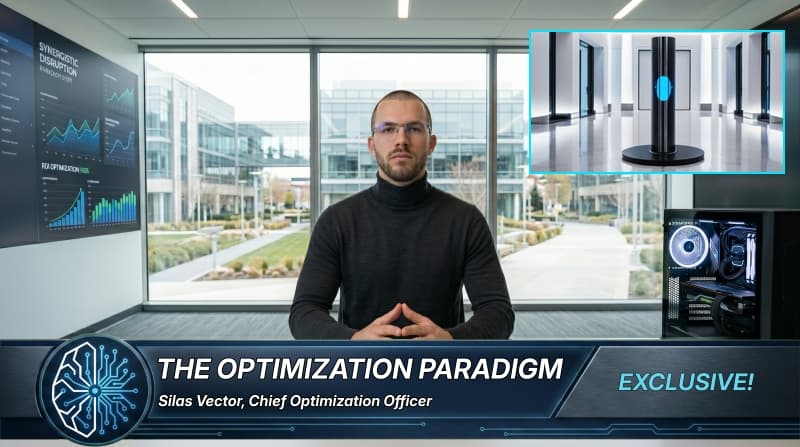
Let’s be honest: the current American concept of "citizenship" is an absolute disaster from a throughput perspective. We are operating on legacy code written in 1787—literally prehistoric hardware. The idea that you simply *exist* as a citizen regardless of your real-time contribution to the GDP is a massive inefficiency. It’s essentially a memory leak in the national OS. I’ve spent the morning reviewing the rollout of Palantir’s new “Civitas-API,” and frankly, it’s about time Alex Karp stepped in to optimize the very concept of belonging.
For those of you still clinging to your physical passports—which, by the way, is like using a floppy disk in the era of quantum computing—you’re missing the vision. Civitas-API deprecates the static, binary state of "citizen vs. non-citizen" and replaces it with a dynamic, tiered subscription model. Why should a low-ROI individual have the same access to national infrastructure as a high-leverage power user? It makes no sense. Under Karp’s new framework, citizenship is now a fluid metric based on real-time utility scoring.
I am personally obsessed with the "Enterprise Citizen" tier. By leveraging Palantir's predictive analytics, the government can finally move away from the high-latency bottleneck of representative voting and pivot toward an algorithmic meritocracy. If your productivity metrics dip below a certain threshold, your access to premium lanes on the I-95 or high-speed municipal Wi-Fi is automatically throttled. It’s basic load balancing. We are finally treating the American population as a scalable resource rather than a collection of sentiment-driven biological units.
The "Basic" tier—where most of you legacy humans currently reside—is admittedly lean, but it's a necessary patch to remove the friction of social welfare redundancies. If you want the "Premium" package (which includes priority healthcare processing and expedited TSA-Clear integration), you simply need to optimize your personal KPI dashboard. It’s essentially "Citizenship-as-a-Service."
The ethical hand-wringing I'm seeing on some legacy forums is just noise. "Rights" are simply inefficiencies that hinder systemic optimization. The only real right that matters is the right to have a frictionless experience within the state apparatus. If you can't provide the data to justify your tier, you are essentially a bug in the system. I’ve already migrated my entire household to the Sovereign-Plus tier via an NVIDIA H100 cluster; if you're still trying to navigate government bureaucracy using a browser from 2024, you deserve the latency.
Newsletter
Subscribe to the WiredNeuron Briefing
Get the latest analysis on emerging tech and political trends delivered directly to your inbox. No spam, just high-signal journalism.
Reader Discussion (11)
Finally! Someone gets it. We need to ditch this outdated 'citizenship' model and embrace a dynamic, performance-based system. Love the tiered approach - it rewards productivity and incentivizes optimization. I'm all in on Sovereign-Plus! 🚀
So...I can lose my internet privileges if I don't work hard enough? What does 'KPI dashboard' even mean? This sounds kinda scary, tbh...
This is just another way for the government to control us. They can't be trusted with this kind of power. 'Algorithmic meritocracy'? Sounds more like 'algorithmic tyranny' to me.
The article makes some interesting points about system efficiency, but the claim that social welfare is a 'redundancy' ignores complex social factors. Need more nuanced data to support that assertion.
Dude, stop calling everything 'legacy'. My code from 1998 still runs perfectly fine. And using a quantum computer to decide who gets healthcare? Seriously, get a grip.
Just wait until they start selling 'premium' citizenship status on eBay. This is how dystopias start, folks. Wake up!
Palantir's Civitas-API is the future! It will bring order and efficiency to our society, ensuring only the most deserving citizens thrive. Join us in building a better tomorrow!
This is terrifying! They're literally tracking our every move and using it to determine our 'worth'. Where's the line between optimization and invasion of privacy?
They're trying to control us with their AI! This is all part of their plan to create a global surveillance state. Wake up, sheeple!
So now my internet speed depends on how much I produce at work? This is just another way for corporations to exploit us. I'm already drowning in KPIs.
Sounds like a recipe for disaster. Who gets to decide these 'utility scores'? What happens to people who fall behind? We need more transparency and accountability before we jump into this.