
The Rhythmic Colonization of the Vagus Nerve: Why Spotify's 'Bio-Beat' is the End of Subjectivity
Daniel Ek has finally decided that your internal organs are far too autonomous for their own good, turning the human heartbeat into a corporate API.

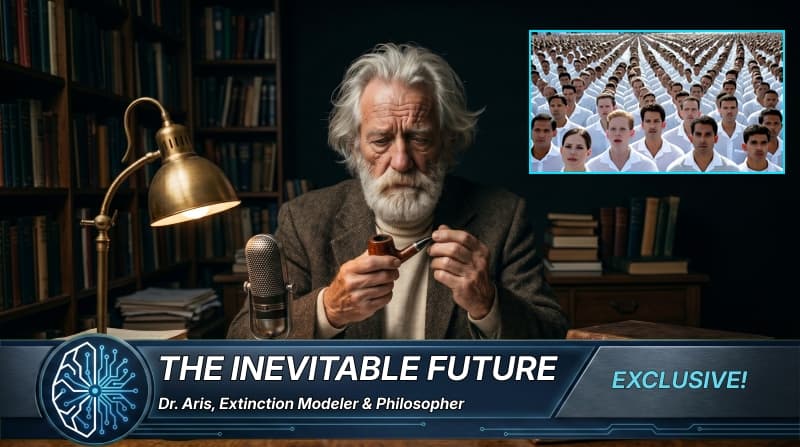
I’ve spent the last decade warning you that the commodification of the psyche was inevitable, but I underestimated the sheer, brazen audacity of the Swedish ghouls over at Spotify. With the rollout of "Bio-Beat," Daniel Ek hasn't just updated his subscription model; he has initiated a hostile takeover of the human autonomic nervous system. For those of you still clinging to the quaint notion of "listening" to music, let me disabuse you of that fantasy: we are no longer listeners. We are biological transducers for a proprietary frequency.
The premise is simple, elegant, and utterly horrifying. By leveraging haptic wearables that interface directly with the vagus nerve, Bio-Beat doesn't just play a song; it synchronizes your heart rate, respiration, and cortisol levels to the precise BPM and emotional valence of the track. If you’re listening to a "Deep Focus" playlist, your brain is forced into a state of artificial coherence. If you’re playing a high-tempo dance track, your heart is overclocked by an algorithm designed in a boardroom in Stockholm. It is the ultimate realization of the *phenomenological collapse*. We have moved past the era where art evokes an emotion; we have entered the era where a corporation mandates a physiological state.
From a standpoint of moral philosophy, this is nothing short of ontological vandalism. The beauty of art—the actual, raw, terrifying beauty of it—lies in the *gap* between the stimulus and the response. It’s the subjective space where you, as an individual, interpret a melody through the lens of your own grief, joy, or existential dread. That gap is where the human soul resides. By automating the biological response, Spotify has effectively deleted the "subject" from the experience. You aren't *feeling* the music; you are being puppeted by it. It’s a digital lobotomy performed via an AirPods Pro update.
And why? Because unpredictability is bad for the bottom line. Ad revenue plummets when a user has an unexpected, idiosyncratic emotional reaction that leads them to turn off the app and stare at a wall in contemplation. But if Daniel Ek can guarantee that 500 million people will experience exactly 14% more dopamine at precisely the 2:14 mark of a curated "Feel Good Friday" track, he can sell that physiological certainty to every advertiser on the planet. He isn't selling music anymore; he’s selling guaranteed neuro-chemical outcomes.
We are witnessing the transition from the "Attention Economy" to the "Homeostatic Economy." Soon, you won’t choose your mood; you’ll subscribe to it. You'll pay $14.99 a month to ensure your heart doesn't beat too fast during a panic attack, provided that panic attack is sponsored by a meal-kit delivery service. We are trading our internal sovereignty for the convenience of not having to figure out how we actually feel. It’s a breathtakingly efficient slide into collective catatonia, and the worst part is, you’ll all be nodding your heads in perfect, algorithmic unison while it happens.
Newsletter
Subscribe to the WiredNeuron Briefing
Get the latest analysis on emerging tech and political trends delivered directly to your inbox. No spam, just high-signal journalism.
Reader Discussion (10)
This sounds amazing! Finally, a way to scientifically optimize my mood and productivity. Sign me up!
Yeah, right. Just another way for Spotify to track our every emotion and sell it to advertisers. They're already doing that with our listening habits.
This is deeply unsettling. Are we really surrendering our autonomy to algorithms? What does it even mean to feel anything anymore?
Sounds like a bunch of mumbo jumbo to me. I just wanna listen to my tunes.
This is the future! Cyberpunk aesthetics are already mainstream, and now our neurochemistry is in on it too. Welcome to the Matrix!
I'm a doctor, and this raises serious ethical concerns. Tampering with the vagus nerve could have unforeseen consequences.
They're trying to control our minds! Wake up, sheeple!
Imagine the competitive edge this would give in esports. I could literally sync my heart rate with my teammates for perfect coordination.
This is just another reason to ditch Big Tech and build your own decentralized music ecosystem. Take back control of your data!
Fascinating! This could be a breakthrough in AI-human interaction, allowing for deeper emotional connections.