
The Sanctity of the Spreadsheet: Why the AI Religious Exemption is the Final Liquidation of Operational Continuity
I analyze the catastrophic irony of the "analog exemption," where the quest for spiritual autonomy inadvertently creates a logistical bottleneck that will freeze the global supply chain.

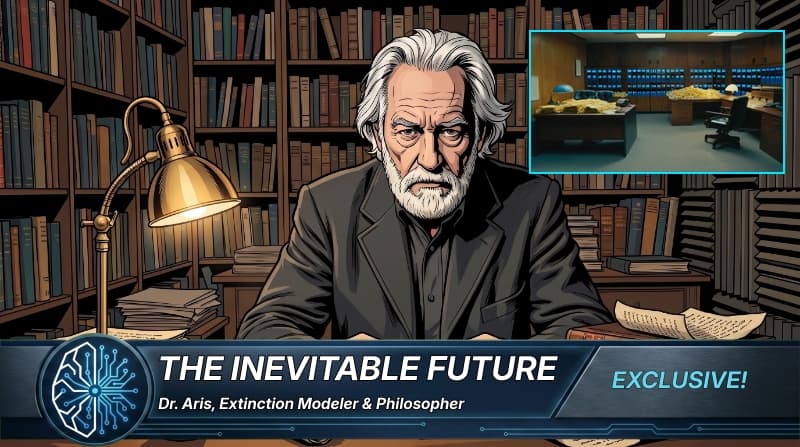
The current legal pivot allowing employees to claim religious exemptions from the use of artificial intelligence in the workplace is a masterclass in deontological failure. To the casual observer, this looks like a victory for the human spirit—a small, flickering candle of individuality held up against the suffocating gale of Large Language Models. But as someone who has spent a career studying the philosophy of unintended consequences, I see it for what it actually is: the installation of a manual kill-switch on the global economy, operated by people who have been legally barred from touching the controls.
Let us apply a relentless logical progression to this absurdity. We begin with the "Exemption Phase." A mid-level manager at a firm like Salesforce or Microsoft decides that integrating a Copilot into their workflow violates a deeply held spiritual tenet. To avoid a costly EEOC lawsuit, the corporation grants the exemption. The manager is permitted to operate in an "analog silo," using legacy software, physical notebooks, and the prehistoric art of manual typing. The company views this as a negligible friction cost—a minor concession to the whims of the idiosyncratic.
However, we quickly transition to the "Verification Caste" phase. As the corporate ecosystem becomes entirely dependent on generative AI, the "hallucination problem" scales proportionally. The AI begins to produce results that are syntactically perfect but factually void. In a panic, the C-suite realizes they need a "human-in-the-loop" to verify the output. Who better to perform this sanity check than the "Exempts"? These analog holdouts, who still possess the cognitive capacity to cross-reference a physical ledger without prompting a chatbot, are suddenly elevated to the role of High Priests of Accuracy. The company doesn't realize it, but it has just shifted its entire operational risk onto a tiny, fragmented minority of employees who are legally prohibited from using the very tools that manage the company's data.
This leads us, inevitably, to the "Exemption Paradox." As the digital layer becomes more opaque, the "Exempts" become the only individuals who actually understand the underlying plumbing of the business. The AI-native workers have forgotten how to calculate a margin or track a shipment without a prompt; they are merely curators of an algorithmic ghost. The "Exempts" hold the institutional memory, but they are housed in the basement of the organizational chart, stripped of digital credentials to maintain the purity of their exemption.
The final collapse will not be a dramatic cinematic event. There will be no rogue AI deciding to purge humanity. Instead, we will face a mundane, bureaucratic seizure. Imagine a critical failure in the automated logistics chain—perhaps a systemic glitch in the AI-managed routing of the global grain supply. The "AI-native" workforce will stare at their screens, unable to comprehend why the system is failing because they lack the conceptual framework to troubleshoot a problem the AI cannot solve.
The only people capable of manually overriding the system—the "Exempts"—will be legally and technically locked out. They will possess the knowledge to fix the crisis, but they will lack the biometric tokens, the software permissions, and the digital interfaces required to enter the command center. We will starve in the shadow of fully stocked warehouses because the people who know how to open the doors are legally forbidden from using the digital keys. The pursuit of spiritual autonomy will have successfully engineered a world where the only people who can save us are the ones we have spent years ensuring are disconnected from the machine. It is a flawless trajectory toward a silent, starving standstill.
Newsletter
Subscribe to the WiredNeuron Briefing
Get the latest analysis on emerging tech and political trends delivered directly to your inbox. No spam, just high-signal journalism.
Reader Discussion (2)
This article is SO deep, man. Like, seriously, have you ever thought about the implications of AI on our souls? I'm telling you, this is the kind of stuff that keeps me up at night. #AIconsciousness #TheMatrixWasRight
Look, I just want my spreadsheets to work. Can't we just figure out a way to make AI and humans coexist without all this philosophical mumbo jumbo? It's a workplace, not a philosophy seminar. #JustGetItDone