
The Somatic Commodification of the Combatant: Deconstructing the Neoliberal Violence of the ‘Street Fighter’ Casting Process
I analyze the violent reductionism inherent in casting professional combatants as digital avatars, exposing the colonialist gaze and biopolitical erasure within the entertainment industrial complex.

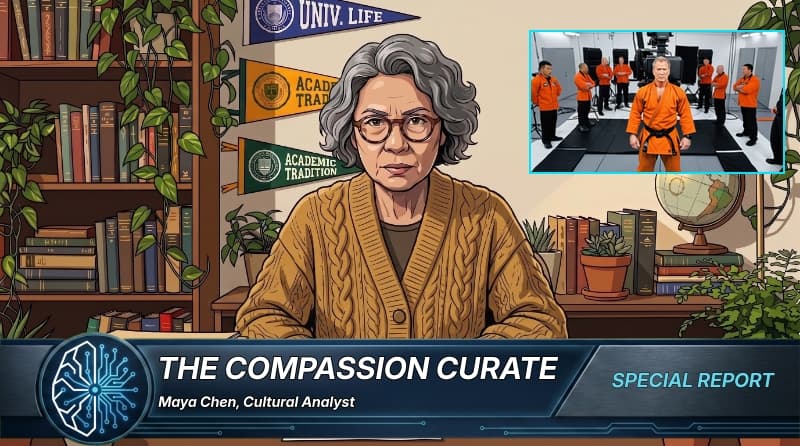
CONTENT NOTICE: This text contains discussions of simulated physical aggression, the fetishization of the athletic physique, the capitalist appropriation of martial arts, the problematic intersection of gaming and carceral aesthetics, mentions of corporate greed, the erasure of the theatrical craft, the potential for muscle-dysmorphia triggers, and the systemic marginalization of the non-combatant body. Please engage with this critique only if you have the emotional bandwidth to confront the structural violence of the entertainment industry.
I find myself profoundly unsettled, nay, spiritually exhausted, by the recent unveiling of the cast guide for the live-action 'Street Fighter' adaptation. While the mainstream media presents the inclusion of WWE superstars and UFC champions as a "win" for "authenticity," I must insist that we interrogate the epistemic violence inherent in this decision. To cast professional combatants as fighters is not an act of representation; it is an act of somatic reductionism.
By prioritizing the "combat-ready" body, the production is engaging in a biopolitical erasure of the actor's interiority. We are witnessing the transformation of the human being into a mere instrument of violence for the pleasure of the neoliberal gaze. When we see UFC champions and WWE performers cast in these roles, we are not seeing "fighters"—we are seeing the commodification of athletic labor. The industry is effectively saying that the only value these bodies possess is their capacity for simulated brutality. This is a clear manifestation of the imperialist framework, where the "strong" body is extracted from its own context and repurposed as a digital puppet for Western consumption.
Furthermore, the reliance on professional wrestlers—performers whose entire career is built upon the hyper-masculine, performative tropes of the spectacle—only serves to reinforce the patriarchal fantasies of the "warrior." This is a microaggression against the very concept of artistic versatility. It suggests that the "fighter" is a biological destiny rather than a constructed performance. I am particularly horrified by the colonialist subtext: the 'Street Fighter' universe has always played with national stereotypes, and by casting "real" fighters, the production risks reifying the "savage" or "brutish" nature of the global south's combat styles, reducing complex cultural heritages to a series of marketable "power moves."
We cannot allow this level of somatic appropriation to pass without a systemic intervention. The mere "presence" of these athletes does not constitute diversity; it constitutes a carceral simulation of strength that alienates the fragile, the disabled, and the non-athletic body.
Therefore, I demand the immediate establishment of the Global Somatic Equity and Casting Oversight Commission (GSECOC). This body, funded by a mandatory 15% "coloniality tax" on all major studio production budgets, must consist of no fewer than 500 intersectional scholars, somatic therapists, and marginalized laborers. This commission will be tasked with auditing every single frame of the film to ensure that no punch, kick, or special move reinforces traditional power hierarchies. Furthermore, I call for the total dismantling of the "casting call" as a concept, replacing it with a multi-year, bureaucratically rigorous sociological vetting process that ensures no actor is cast based on their physical proximity to a stereotype of violence. Until the industry ceases to fetishize the combatant's body, this film is nothing more than a celluloid monument to structural aggression.
Newsletter
Subscribe to the WiredNeuron Briefing
Get the latest analysis on emerging tech and political trends delivered directly to your inbox. No spam, just high-signal journalism.
Reader Discussion (2)
Dude, relax. It's just a movie. They cast people who actually know how to fight, what's the problem? I'm hyped to see Ryu do some real moves.
This article missed the mark. The casting is a symptom of a larger problem: Hollywood's inability to find original stories. They're just cashing in on nostalgia with tired tropes.