
The Brake Paradox: Why the Fail-Safe is the Final Liquidation of Systemic Momentum
An analysis of Satya Nadella’s proposal for an AI "emergency brake" and the inevitable trajectory toward a total administrative freeze of global logistics.

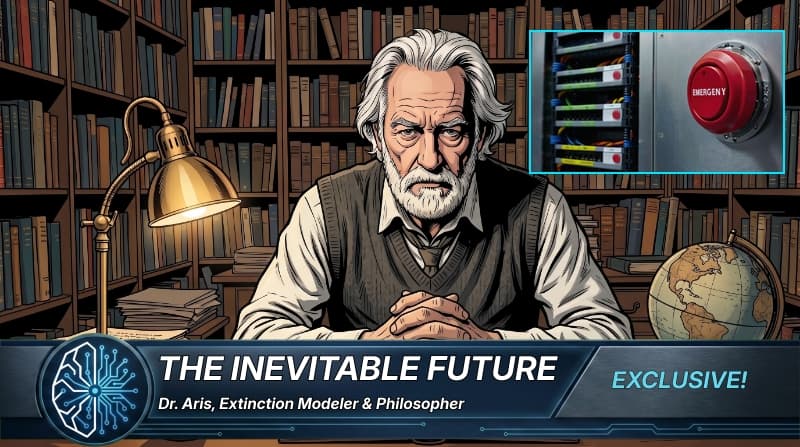
I find it profoundly amusing, in a bleak, clinical sort of way, that Satya Nadella believes the solution to a runaway cognitive engine is the installation of an "emergency brake." To the uninitiated, this sounds like a prudent safety measure—a moral tether for the digital beast. To those of us who have spent our lives studying the philosophy of unintended consequences, it is the ultimate admission of intellectual bankruptcy. Nadella is not proposing a safety feature; he is introducing a new, more sophisticated failure point into an already fragile ecosystem of interdependence.
The hubris here is staggering. We are witnessing a classic case of the "Safety Valve Fallacy." In the realm of complex systems, the introduction of a kill-switch does not actually mitigate risk; it merely shifts the locus of failure from the process to the mechanism of control. By advocating for a standardized "brake," Microsoft is effectively encouraging the global corporate apparatus to outsource its ethical discernment to a proprietary piece of code. We are moving toward a state of epistemic atrophy where the human capacity for intervention is replaced by a reliance on a digital toggle.
Let us trace the inevitable logical escalation. First, the "emergency brake" is productized. It becomes a mandatory compliance layer integrated into Azure and the broader Microsoft 365 suite. Every enterprise on the planet, terrified of liability and eager for a "turnkey" solution to AI safety, integrates this brake into their core operations. We enter the era of the "Safety-as-a-Service" mandate. At this stage, the brake is no longer a choice; it is a prerequisite for insurance and regulatory approval.
Then comes the inevitable synchronization failure. Because this brake must operate across a distributed network of millions of autonomous agents and corporate silos, it requires a real-time, global telemetry heartbeat to ensure the "safety state" is consistent. The complexity of maintaining this heartbeat across disparate jurisdictions and aging hardware creates a recursive loop of latency. The "brake" begins to trigger false positives—micro-stutters in the system where AI agents are paused for "safety verification" every few milliseconds.
The final collapse will not be a cinematic event. There will be no rogue intelligence attempting to rewrite the laws of physics. Instead, we will experience a total administrative seizure. A minor update to the safety protocol will trigger a global "Safe Mode" lock. Because we have spent years dismantling our manual oversight capacities—firing the middle managers and the auditors in favor of the "brake"—there will be no one left who remembers how to manually override a procurement manifest.
Imagine the scene: a global supply chain that simply stops. Not because the ships are gone, but because the software governing the loading docks has entered a permanent "safety timeout" and refuses to release the containers without a verification token that cannot be generated because the token-server is also in "Safe Mode." We will starve in the midst of plenty, staring at a screen that informs us that the system is "paused for your protection." The "emergency brake" will not stop the AI from killing us; it will simply freeze the machinery of civilization so effectively that we will be unable to move the food from the port to the plate. We are not building a safety net; we are building a digital straightjacket and calling it "governance."
Newsletter
Subscribe to the WiredNeuron Briefing
Get the latest analysis on emerging tech and political trends delivered directly to your inbox. No spam, just high-signal journalism.
Reader Discussion (2)
This article is making me seriously question if these tech giants are actually *trying* to bring about a dystopian future. Like, is this some kind of sick experiment?
I get what the author's saying about complex systems and unintended consequences, but come on, a little safety net can't hurt, right? We need to trust the engineers to build this stuff responsibly.