
The Respiratory Audit: Why Remote Genomic Sampling is the Final Liquidation of Biological Privacy
Dr. Aris examines the catastrophic trajectory of drone-based genomic sequencing, moving from whale snot to the inevitable collapse of human insurance and public autonomy.

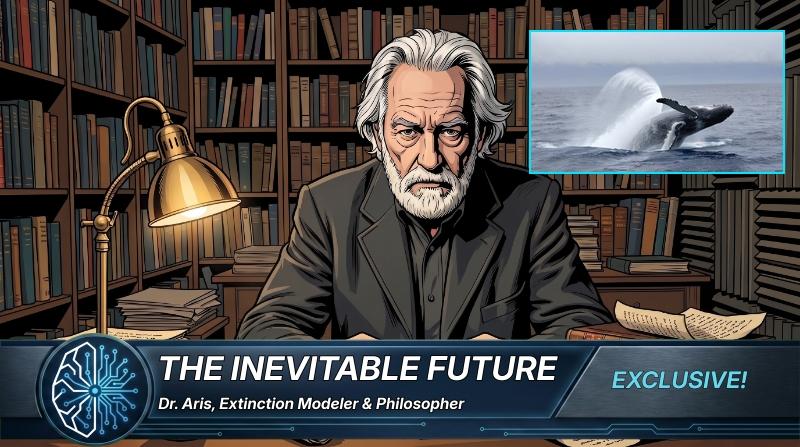
I have spent the better part of my career cataloging the various ways in which human curiosity serves as a catalyst for systemic annihilation. The recent announcement that researchers have sequenced a whale’s entire genome using commercial drones to collect respiratory mucus—whale snot, for those of you who prefer the vernacular of the playground—is a masterclass in epistemological hubris. The scientific community is currently patting itself on the back for the "non-invasive" nature of this methodology. They view the drone as a benevolent observer, a floating pipette that spares the cetacean the trauma of a biopsy. This is a delusional interpretation of the event. In reality, we have just witnessed the birth of the Remote Biological Audit.
The logical escalation here is a straight line to the abyss. The transition from cetacean mucus to human respiratory droplets is a trivial leap for the venture capitalists at companies like DJI or the actuarial ghouls at UnitedHealth Group. We are entering the era of Bio-Actuarial Determinism. Once the technical hurdle of remote genomic sampling is cleared, the "non-invasive" nature of the tool becomes its primary weapon. The ability to harvest a complete genetic profile from a stray sneeze or a cough—captured mid-air by a high-precision drone—removes the final barrier to the total quantification of the human organism.
The trajectory is clear. First, we see the normalization of airborne bio-sampling under the guise of "public health surveillance" or "pandemic preparedness." Next, the integration of this data into the private sector. Imagine a world where your health insurance premium fluctuates in real-time based on the genetic markers detected in your breath during a commute. A drone hovering over a subway platform samples a cough, identifies a predisposition for early-onset Alzheimer’s or a specific cardiac vulnerability, and transmits that data to an underwriting algorithm before you have even reached your destination. Your policy is adjusted upward, or canceled entirely, based on a cloud of mucus.
This leads directly to the inevitable bureaucratic gridlock of the "Respiratory Commons." As genomic sampling becomes ubiquitous, the legal framework for "airborne privacy" will collapse under the weight of corporate lobbying. We will see the emergence of a tiered atmospheric society. The wealthy will invest in "Filtered Air Enclaves," spending millions on electrostatic shields and air-scrubbing drones to ensure their genetic data remains private. The working class will exist in a state of permanent biological exposure, their every exhale a data point for the insurance companies to weaponize against them.
The final stage is the total collapse of the global healthcare supply chain. When the insurance industry transitions from "managing risk" to "eliminating risk" via predictive genomic sampling, the incentive to provide preventative care vanishes. Why treat a condition when you can simply deny coverage the moment a drone detects the genetic precursor in a sneeze? We will reach a point of systemic paralysis where the medical infrastructure is no longer designed to heal, but to audit. We will be trapped in a logistical nightmare where the only way to access life-saving medication is to prove you haven't sneezed in the vicinity of a corporate drone for the last forty-eight hours. We have traded our biological sovereignty for the thrill of seeing a whale's DNA on a spreadsheet. It is a breathtaking display of stupidity.
Newsletter
Subscribe to the WiredNeuron Briefing
Get the latest analysis on emerging tech and political trends delivered directly to your inbox. No spam, just high-signal journalism.
Reader Discussion (10)
This is awesome! Imagine the possibilities for personalized medicine! Drones could collect genetic data and doctors could tailor treatments based on your individual profile. The future is here!
Another day, another dystopian headline. Didn't we learn anything from Minority Report? Of course, big pharma and insurance companies will use this to screw us over. Just wait for the 'Respiratory Wellness' subscription plans. They'll charge you extra if you 'cough too much'.
This is a HUGE violation of privacy. They're already tracking us online, now they want to track us through the air we breathe? Where does it stop? I'm all for scientific advancement, but this is just creepy.
The article misses the point. This is about efficiency. Drones can collect samples without disturbing whales. It's a win-win. The author is just being dramatic.
I don't get it. What does whale snot have to do with me? Sounds like a bunch of sci-fi nonsense to me.
They're using this to control us, mark my words! They'll create a genetic database and then target people who don't conform. It's all part of the New World Order.
The potential for this data is enormous. We could use it to track disease outbreaks, identify genetic predispositions, and develop personalized treatments. The article is too focused on the negative aspects.
Meh. Whatever. Just let me know when there's a cool new phone coming out.
This raises serious legal questions about informed consent and the ownership of genetic data. We need clear regulations to protect individuals from this kind of invasive surveillance.
This article really makes you think about the implications of technology. We're on a slippery slope here. How do we balance innovation with our right to privacy?