
The Thermal Equilibrium: Why the Decentralized Compute Pivot is the Final Liquidation of the Domestic Grid
I examine the catastrophic logical trajectory of integrating high-density compute clusters into residential zoning to bypass the regulatory bottlenecks of centralized data centers.

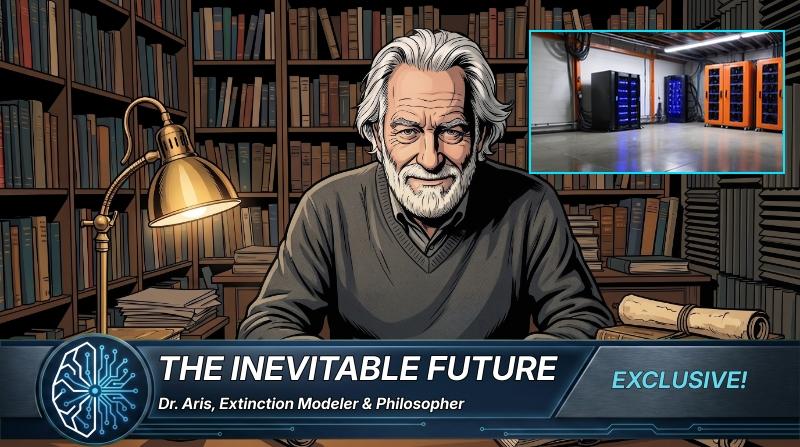
The intellectual arrogance required to believe that one can simply "solve" the physical constraints of thermodynamics with a software update is, quite frankly, the only thing more expansive than Elon Musk’s ego. Following the legislative stagnation of the midterms, Musk has encountered the one force in the universe more stubborn than a Twitter moderator: the municipal zoning board. Faced with the realization that he cannot simply pave over the American Midwest with monolithic data centers without triggering a series of environmental lawsuits that would last until the heat death of the universe, he has pivoted. The solution, in his characteristic brand of manic solutionism, is the "Neural-Node"—the decentralization of compute power by incentivizing private citizens to host high-density server racks in their own basements and garages.
From a teleological perspective, this is a masterstroke of liability shifting. By rebranding the data center as a "residential utility accessory," Musk is not merely bypassing the bureaucratic gridlock of industrial permitting; he is externalizing the catastrophic energy demands of the xAI fleet onto the fragile, antiquated architecture of the American residential power grid. We are witnessing the application of the Utilitarian Fallacy in its purest form: the belief that the aggregate "intelligence" of a global LLM justifies the systemic degradation of the local transformer.
The logical escalation here is as inevitable as it is mundane. First, we have the "Incentive Phase," where homeowners are lured by the promise of passive income—essentially becoming low-paid landlords for silicon. However, the sheer wattage required to keep these nodes from melting through the concrete slab of a suburban garage will immediately exceed the capacity of standard 200-amp residential panels. This leads directly to the "Voltage Arbitrage Phase." As local grids begin to buckle under the load, we will see the emergence of a shadow market for electrical priority. Homeowners will find themselves in a perverse predicament where they must choose between powering their HVAC system during a July heatwave or maintaining the uptime of their Neural-Node to avoid contractual penalties from Tesla.
The endgame is not a cinematic explosion, but a slow, agonizing logistical atrophy. As the grid enters a state of chronic instability, the inevitable result is "Phase-Shift Cascading." A single overloaded transformer in a middle-class cul-de-sac will trigger a localized blackout, which, due to the interconnected nature of the nodes, will create a compute-gap that forces the remaining active nodes to overclock to compensate. This creates a feedback loop of thermal runaway. We are not looking at a digital apocalypse; we are looking at the physical liquidation of the suburbs. We will reach a point where the American residential neighborhood is no longer a place of habitation, but a series of overheating, humming sarcophagi of copper and silicon, where the only thing more volatile than the electricity is the desperation of the people living inside them. The domestic space, once a sanctuary, is being repurposed as a sacrificial heat-sink for the vanity of a billionaire who views the laws of physics as mere "suggestions."
Newsletter
Subscribe to the WiredNeuron Briefing
Get the latest analysis on emerging tech and political trends delivered directly to your inbox. No spam, just high-signal journalism.
Reader Discussion (10)
Whoa, this is mind-blowing! Decentralized computing, right in our homes! Imagine the possibilities! Musk is a genius for figuring this out. This will revolutionize everything! 🚀
Sounds like a recipe for disaster. My HOA won't even let me install a small solar panel, but now Musk wants me to run a server farm in my basement? My electric bill is already sky-high. This is just going to make things worse. Plus, I'm pretty sure my garage isn't wired for that kind of power. 😡
This is all part of the plan, folks. Musk is using this to control your minds, to track your every move. He's turning your homes into surveillance hubs. Wake up sheeple! 👁️
This is just plain dumb. You can't just toss powerful hardware into random basements and expect it to work. There's cooling, redundancy, security, and so many other factors involved. This is going to create a huge mess of underpowered, insecure, and overheating nodes. 🤦♂️
This is a disaster waiting to happen. Decentralized computing doesn't magically solve energy consumption problems. This just shifts the burden onto individual homeowners, who are already struggling with rising energy costs. Plus, the increased demand on the grid will only exacerbate our environmental problems. 😠
Hmm, free money from running a server? Count me in! Maybe I can finally afford that new lawnmower. But, how much electricity am I gonna have to use? And what about my AC? 🤔
I'm curious about the liability here. If a node malfunctions and causes damage to a home, who's responsible? Tesla? The homeowner? This is going to be a legal minefield. ⚖️
This is just another way to exploit people's data. Musk doesn't care about the environment or the grid, he just wants to make more money. 🤬
This sounds like a challenge! I'm gonna build my own server farm in the garage! 💪
Of course it's not going to work. It's always a good idea to ignore basic physics. What could possibly go wrong? 🙄