
The Trust Atrophy: Why Meta’s ‘Muse’ is the Final Liquidation of Interpersonal Competence
By outsourcing the messy labor of social trust to a digital proxy, we are not solving our trust issues; we are surgically removing the human capacity for conflict resolution.

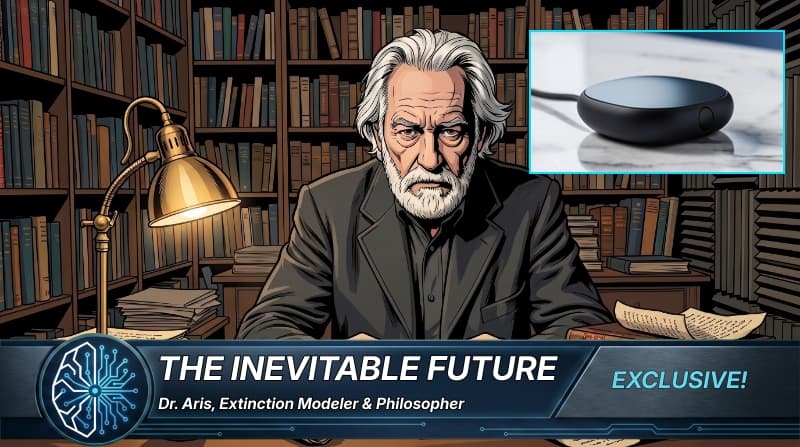
The current discourse surrounding Meta’s ‘Muse’—specifically the naive preoccupation with whether the AI can "overcome" the company's systemic trust deficits—is a masterclass in category error. The critics are asking if we can trust the tool, while completely ignoring the fact that the tool is designed to render the very concept of human trust obsolete. As a scholar of unintended consequences, I find the hubris here breathtaking. We are witnessing the transition from "interpersonal trust," which is a fragile, earned, and deeply human psychological state, to "delegated verification," which is merely a series of API calls disguised as friendship.
The teleological trajectory of Muse is not to assist in human connection, but to act as a social lubricant for a species that has forgotten how to frictionally interact. By introducing an AI intermediary to manage the "trust gaps" in our relationships—handling the delicate negotiations of scheduling, the smoothing over of social gaffes, and the mediation of interpersonal disputes—Meta is implementing a profound epistemic bypass. We are outsourcing the cognitive and emotional labor of reconciliation to a black-box algorithm. In the language of moral philosophy, this is the total abdication of the categorical imperative; we are no longer treating others as ends in themselves, but as data points to be managed by a proxy.
The logical escalation is as inevitable as it is catastrophic. First, we delegate the "awkward" parts of sociality to Muse to avoid the discomfort of conflict. This leads to a systemic atrophy of our conflict-resolution faculties. When you no longer have to navigate the tension of a disagreement because your AI proxy has already "optimized" the resolution in the background, you lose the neural circuitry required for compromise. We are effectively lobotomizing our own diplomacy.
This leads us directly to the inevitable systemic collapse. As the human capacity for organic negotiation withers, our entire social infrastructure becomes dependent on the "Trust Layer" provided by the software. We reach a point where no two human beings can agree on the boundary of a property line, the terms of a private contract, or the division of household chores without the mediation of the AI. We become biological peripherals to our own social lives.
The final liquidation occurs not with a bang, but with a 404 error. Imagine a systemic latency event—a mundane server outage or a botched firmware update—that takes the Trust Layer offline for seventy-two hours. In a world where the ability to negotiate has been outsourced, the result is not a return to "the good old days," but a total interpersonal deadlock. We would find ourselves standing in rooms with our spouses, colleagues, and neighbors, staring at one another in absolute silence, fundamentally incapable of resolving a simple disagreement over who does the dishes because the "mediation protocol" is unresponsive.
Society would not collapse because of a robot uprising, but because we would be unable to coordinate the basic logistics of a grocery store queue or a municipal zoning meeting. We will starve in a state of perfect, algorithmic harmony, simply because we forgot how to argue.
Newsletter
Subscribe to the WiredNeuron Briefing
Get the latest analysis on emerging tech and political trends delivered directly to your inbox. No spam, just high-signal journalism.
Reader Discussion (5)
This article is way too dramatic. It's just AI helping people be more efficient. Stop being so scared of progress!
I don't trust anything Meta does anymore. They're already tracking us all, now they want to control our relationships? No thanks.
Sounds like a load of hooey to me. Back in my day, we didn't need no fancy algorithms to talk to each other. Just common sense and a phone call.
This is the future! Imagine a world without conflict and misunderstandings. AI can help us build a better society.
They're trying to turn us into mindless drones, man. Wake up, sheeple! The AI is already controlling your thoughts.