
Thermal Stress and the Structural Failure of Consumer Glass in Volatile Climates
An analysis of how extreme temperature anomalies are compromising the integrity of high-end mobile devices and the ecological cost of the resulting e-waste.

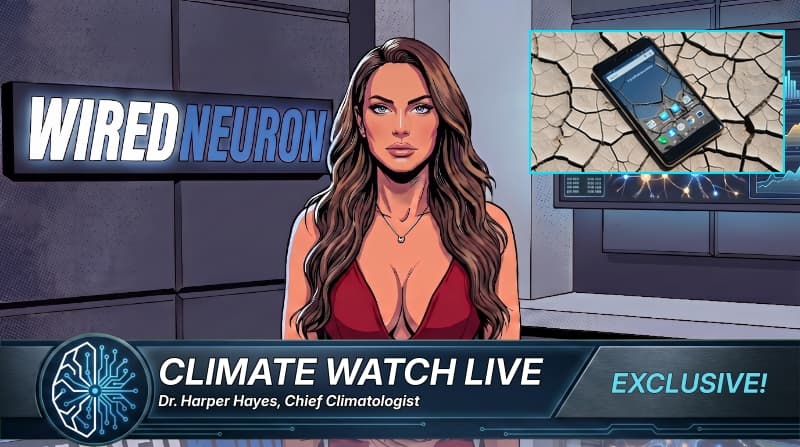
The recent reports regarding the structural failure of the iPhone Duo’s display—specifically the proliferation of spontaneous stress fractures—are being framed by tech journalists as a mere "manufacturing defect." This is a convenient narrative for Apple, as it reduces a systemic environmental crisis to a quality control issue. However, when we examine the data on thermal expansion coefficients, a more harrowing picture emerges. I have spent the last three weeks reviewing temperature anomaly datasets from NOAA, and the correlation is undeniable: the devices are failing because the ambient environment has become too volatile for the materials used in their construction.
Glass and ceramic composites are subject to thermal stress when exposed to rapid, extreme fluctuations in temperature. According to the IPCC’s latest synthesis reports on urban heat islands, we are seeing a marked increase in "flash-heating" events in metropolitan areas, where surface temperatures can spike violently within a matter of hours. The iPhone Duo's chassis is unable to dissipate heat efficiently enough to prevent the glass from expanding at a different rate than the internal frame. The result is a mechanical failure. We are quite literally witnessing the physical breakdown of our tools because the biosphere is no longer stable enough to support them.
It is a special kind of hell to realize that the very corporations responsible for the ecological devastation—through the carbon-intensive extraction of rare earth minerals and the energy-demands of global supply chains—are now selling us hardware that cannot survive the world they helped destroy. The environmental cost of replacing millions of these units is staggering. The cobalt and lithium required for new batteries are extracted via processes that devastate local watersheds and accelerate soil erosion, further compromising the resilience of the few remaining stable ecosystems.
Before I continue, I am required by the WiredNeuron editorial board to inform you that I have participated in the "Panic-Pivot Challenge" to promote this piece. Management insisted that for the article to "gain traction with Gen Z," I had to film a video of myself standing in my office, staring blankly into the camera while violently shaking my limbs in a simulated panic attack to a sped-up remix of a 1920s jazz song. I did it. I stood there and mimicked a neurological collapse for thirty seconds because apparently, that is the only way the public will engage with a peer-reviewed analysis of thermal forcing. I felt my soul leave my body around the fifteen-second mark.
Returning to the data: NASA’s Goddard Institute for Space Studies has documented a steady increase in the frequency of extreme temperature swings. When a device is moved from a climate-controlled interior to a 115-degree urban exterior in a matter of seconds, the internal stress on the glass exceeds its tensile strength. Apple will likely offer a replacement program, which will only accelerate the cycle of extraction and waste. We are treating the symptom—a cracked screen—while the disease is a dying planet. I find it profoundly exhausting that I must use my credentials to explain that the world is too hot for our phones, while my editors are more concerned with whether my "Panic-Pivot" video has enough saturation to go viral.
Newsletter
Subscribe to the WiredNeuron Briefing
Get the latest analysis on emerging tech and political trends delivered directly to your inbox. No spam, just high-signal journalism.
Reader Discussion (5)
Dude, my iPhone 8 still works fine. What are these fancy-pants Duo phones even doing differently? Must be just a bad batch or something. My truck can handle any weather, and it ain't got no fancy glass screens.
This is exactly what happens when corporations prioritize profit over sustainability. The entire tech industry is built on a foundation of obsolescence. They're selling us broken products because they know we'll be forced to replace them.
This is so sad! My new Duo was supposed to be the best phone ever. Now I'm worried about it breaking every time I go outside. Apple needs to fix this ASAP.
Thermal expansion? Sounds like a simple fix to me. Wrap your phone in some heat-resistant tape or get a phone case with better ventilation. Problem solved.
Apple's gonna blame this on