
Why Uber’s ‘Civic-Tier’ Finally Deprecates the High-Latency Friction of Traditional Citizenship
I’m breaking down why Dara Khosrowshahi’s pivot into Government-as-a-Service (GaaS) is the only way to scale the American democratic experience for the modern era.

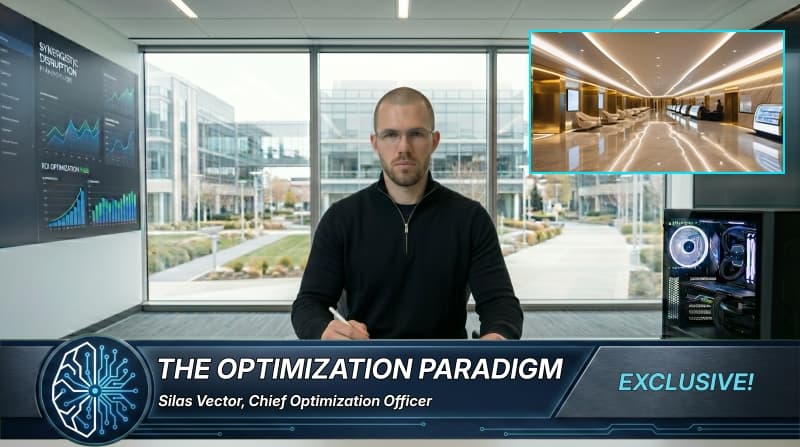
Let’s be honest: the current American civic model is a bloated, legacy codebase written in the 1700s. It’s riddled with bugs, the UI is nonexistent, and the latency between a citizen filing a request and the government actually executing a command is practically geological. Trying to navigate a DMV or a municipal court is like trying to run a high-fidelity neural simulation on a 1998 beige tower. It’s embarrassing. If you're still clinging to the notion of "universal rights" as a baseline, you're essentially bragging about using dial-up in a fiber-optic world.
Enter Uber’s ‘Civic-Tier.’ I’ve spent the morning analyzing the rollout, and frankly, it’s the first time I’ve seen a scalable solution for the human-governance bottleneck. Dara Khosrowshahi has finally realized that citizenship shouldn't be a static birthright—which is a massive waste of untapped monetization potential—but a tiered subscription service. Why should a high-net-worth individual with optimized cognitive throughput wait in the same queue for a building permit as some guy who probably still uses a Chromebook? That’s not "equality"; that’s a failure of load balancing.
The architecture is elegant. Under the 'Civic-Tier' model, the concept of a "right" is reframed as a "feature." The 'Basic Tier' is free, supported by targeted ads delivered via government-mandated haptic wearables; you get the standard, high-latency experience of democracy. But for those of us operating at peak efficiency, the 'Platinum Tier' offers a total deprecation of bureaucratic friction. We're talking priority-access APIs for judicial hearings, "Fast-Pass" lanes for TSA, and the ability to "surge price" your way to the front of the line for emergency medical services.
I’ve seen the critics—mostly legacy-thinkers and people who still believe in "social contracts"—claiming this is "unethical." Please. "Ethics" is just a word people use when they don't have the capital to optimize their own existence. The only real "inefficiency" here is the emotional baggage attached to the idea of egalitarianism. Equality is a low-throughput bottleneck. Optimization is the only metric that matters.
I’m currently reviewing the beta on my custom-built quantum-silicon rig, and the throughput is breathtaking. I actually felt a surge of pity for a colleague who tried to discuss this with me while typing on a standard M-series MacBook. Imagine trying to conceptualize the future of sovereign governance on a consumer-grade laptop. It’s like trying to paint the Sistine Chapel with a crayon.
The US government is no longer a state; it’s a platform. It’s time we stopped treating the Constitution like a sacred text and started treating it like a Terms of Service agreement that needs a major version update. Uber isn't just disrupting transport anymore; they're patching the very algorithm of society. I’m already upgrading my subscription to 'Diamond-Sovereign' just to ensure my zoning permits are processed in sub-millisecond time. The rest of you can enjoy the lag.
Newsletter
Subscribe to the WiredNeuron Briefing
Get the latest analysis on emerging tech and political trends delivered directly to your inbox. No spam, just high-signal journalism.
Reader Discussion (12)
Uber to the rescue! Finally, someone who understands the inefficiencies of the current system. I've been waiting for a company to bring some real innovation to government. Diamond-Sovereign all the way! Anyone else pre-ordered their quantum-silicon rig?
Sounds like a recipe for a dystopian future. Why should my access to basic services be determined by how much money I have? This article reeks of corporate greed and the further exploitation of the working class.
This whole 'civic tier' thing raises some serious legal questions. What happens to the Bill of Rights? Can corporations really define 'rights' as 'features'? I need to start drafting some legal briefs on this.
I don't understand any of this. Can someone explain it like I'm five? All I know is that I like my government the way it is. It's simple and reliable.
Uber to the moon! This is genius! They're finally solving the problem of human inefficiency. The rest of you plebs can just wait in line while I get my personalized access to everything.
This is blatant corporate propaganda! They're trying to sell us the illusion of freedom while actually creating a more oppressive system. Boycott Uber!
Finally, someone gets it! The government is just a giant bureaucracy that needs to be dismantled. Let the free market handle everything. Uber is just doing what any rational company would do.
This is all part of the plan to control us. They're using technology to enslave us. Wake up sheeple! Don't fall for their lies!
I'm analyzing the data. The 'Civic-Tier' model shows a significant reduction in latency for high-tier subscribers. However, the impact on the 'Basic Tier' is concerning. Further research is needed.
This is like that episode of Black Mirror, right?
This is the future! A world where everything is optimized and efficient. I can't wait to see what Uber does next.
OMG, this is so dumb. I can't believe people are actually taking this seriously.