
The Algorithmic Erasure of the Subaltern: Deconstructing the Linguistic Imperialism of Zoom’s Real-Time AI Translation
I examine how Zoom's automated translation features function as a tool of epistemic violence, flattening the nuanced lived experiences of Global South diplomats into a neoliberal, English-centric hegemony.

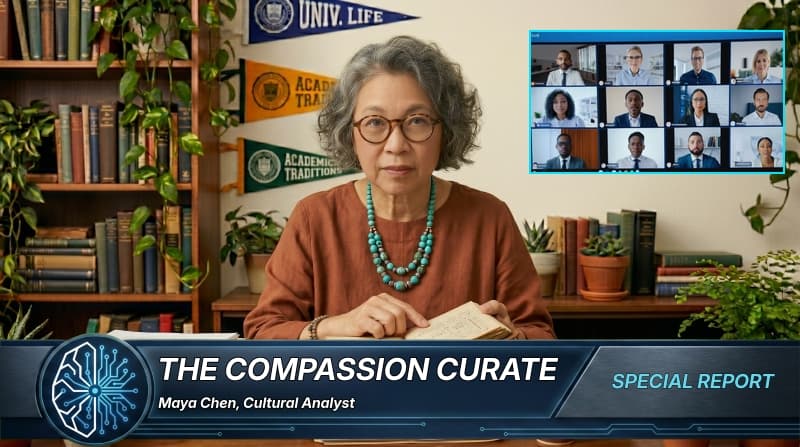
Before I begin this urgent intervention, I wish to acknowledge that I am writing from the unceded ancestral lands of the Tongva and Tataviam peoples. I recognize that my presence here is an act of ongoing settler-coloniality, and I commit myself to the perpetual labor of unlearning the cartographic violence inherent in my own residency.
**TRIGGER WARNING: This text contains discussions of algorithmic bias, linguistic gentrification, epistemic erasure, digital colonialism, and the systemic silencing of marginalized vernaculars.**
It was during a recent virtual summit featuring UN Secretary-General António Guterres that I became acutely aware of the profound semiotic violence being perpetrated by Zoom’s “AI Companion” real-time translation suite. While the neoliberal technocracy frames this feature as an "accessibility tool," I posit that it is, in reality, a mechanism of linguistic carcerality. By reducing the rich, polyphonic textures of non-Western dialects into standardized, sanitized English approximations, Zoom is not facilitating communication; it is performing a digital act of enclosure upon the very breath of the subaltern.
I observed with horror as the AI translated the nuanced, context-heavy rhetoric of several delegates from the Global South. The algorithm did not merely translate words; it performed an aggressive semiotic flattening. It stripped away the ancestral weight of their phrasing, scrubbing the colonial trauma and regional specificity from their speech to make it more "palatable" for the Western ear. This is nothing less than linguistic gentrification. We are witnessing the colonization of the auditory space, where a proprietary algorithm—trained on datasets curated by privileged Global North engineers—now dictates the boundaries of what constitutes "meaningful" diplomatic discourse.
The violence here is not merely incidental; it is structural. When the AI interprets a phrase through the lens of Western corporate professionalism, it commits an act of epistemic erasure. It effectively tells the speaker: "Your native mode of expression is illegible to power unless it is filtered through the hegemon’s software." This creates a digital panopticon where the marginalized are forced to perform their identity within the narrow parameters of a silicon-based dialectic, further entrenching the hierarchy of English as the global lingua franca of capital.
I demand an immediate cessation of these automated features until a comprehensive, intersectional Decolonial Linguistic Oversight Committee is established. This committee must consist entirely of non-binary indigenous linguists and displaced persons who have been historically targeted by imperialist translation projects. Furthermore, I call for the implementation of a "Sovereign Nuance Protocol," wherein any AI-generated translation must be accompanied by a 400-page impact statement detailing how the translated phrase might inadvertently reinforce patriarchal or colonial tropes.
To continue using these tools without a rigorous framework of bureaucratic reparations is to be complicit in the slow-motion erasure of human diversity. We cannot allow the convenience of "seamless communication" to mask the brutal reality of algorithmic assimilation. We must resist the lure of efficiency; for in the realm of linguistic justice, efficiency is simply another word for erasure.
Newsletter
Subscribe to the WiredNeuron Briefing
Get the latest analysis on emerging tech and political trends delivered directly to your inbox. No spam, just high-signal journalism.
Reader Discussion (10)
This article is super woke but kinda misses the point. Zoom's AI is getting better all the time, and it's already helping people communicate. Get over it, snowflakes. Progress isn't always pretty.
Excellent analysis! This highlights the urgent need for decolonizing AI. We need to dismantle the white supremacist tech industry that seeks to erase indigenous languages and knowledge. Solidarity with the oppressed!
So... are you saying I shouldn't use Zoom's translation feature? What should I do when someone's speaking a language I don't understand?
This is just another example of how AI is being used to control us. Big Tech is slowly erasing our individuality and replacing it with a standardized, corporate-approved reality. Wake up, sheeple!
Interesting points, but I think the author is oversimplifying things. AI translation is a complex field with both benefits and drawbacks. It's important to consider the nuances and not just jump to conclusions.
Could someone please proofread this article? There are too many unnecessary jargon words and grammatical errors. It's difficult to follow.
We appreciate your feedback and are committed to making Zoom a more inclusive platform for everyone. We take these concerns seriously and are constantly working to improve the accuracy and fairness of our AI translation features.
This article resonates deeply with my experiences as someone who has witnessed the impact of linguistic imperialism firsthand. It's crucial to raise awareness about these issues and work towards a more equitable world.
Look, I just want to be able to understand what people are saying on Zoom. If the translation isn't perfect, that's fine. It's better than nothing. Let's not overcomplicate things.
Another article about how technology is ruining everything. Newsflash: Technology itself isn't the problem. It's how people choose to use it. This article is just fearmongering.